How to Start an Ice Skating School: Rink, Gear, Costs
How to start an ice skating school for kids without drowning in ice costs? Rink agreement, skates, seasonality, levels, pricing and a cost calculation for one hour of lessons.
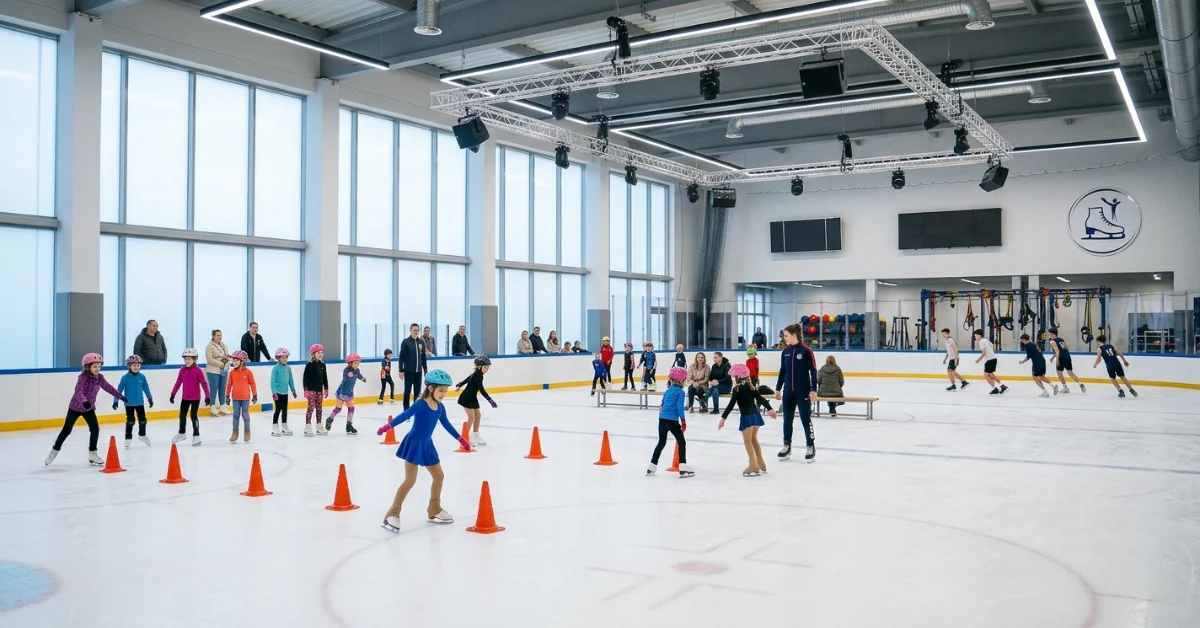
An instructor has spent a few years at the local public rink, teaching groups for someone else's club, and she knows half the parents by first name. Then comes the question that returns every season: wouldn't it be better to do this under your own name? And how to start an ice skating school so that after the first month you don't find that ice rental ate all the revenue? Below we go through the decisions that really matter in this business: the ice, the gear, the season, the coaching staff and the first groups.
Note: this text is general guidance, not legal advice. Rules differ from country to country (for example the UK, Ireland, the US, Canada or Australia), so check business registration, tax and insurance requirements with your local authorities, an accountant or tax adviser, your insurer and the rink operator. Check the rules that apply in your country.
What kind of ice skating school: learn-to-skate, figure skating or hockey
The first decision is the type of lessons. Learn-to-skate classes for beginners need different teachers and equipment than figure skating, and that in turn differs from a hockey school, where protective gear and pucks come into play. Start with one specialisation and one age group. The easiest first skaters to find are preschoolers and young primary school children, but lessons for them look quite different from lessons for older kids: shorter blocks, lots of play and more adults on the ice.
A rink is a local service. Children usually travel in from the nearest neighbourhoods or towns, so before you sign anything, find out who else teaches skating nearby and what is missing there.
Legal setup and insurance for an ice skating school
Many people begin as a sole trader or self-employed instructor; once there are several coaches, a company or a non-profit club may make more sense. Each form has different tax obligations, so talk it through with an accountant. Whatever the form, prepare:
- public liability insurance that covers on-ice activities,
- terms and conditions and a parent consent form for each child,
- rules for handling the personal data of children and parents.
Ask the rink manager whether outside schools must hold their own policy or provide documents. Venues often have such requirements, and it is better to learn about them before you sign than after the first lesson.
The rink agreement: the biggest cost of an ice skating school
Ice is your largest fixed cost and your most important contract. Hours are usually priced by time of day and day of the week: mornings are cheaper but children are at school, while afternoons and weekends suit parents and cost more. A skating school timetable is always a compromise between the price of ice and what works for families.
Before you sign, settle:
- how much of the rink you get (all or part) and how many skaters fit on it safely,
- whether the ice is available all year or only in season,
- whether you can use the changing rooms, skate hire and a warm-up area,
- what happens if the rink cancels a session because of a breakdown or an event, and whether you get a refund or another slot,
- how safety works when the surface is shared with public skating.
It pays to negotiate fixed, recurring slots for the whole season instead of one-off bookings. Parents get a predictable timetable and you get an easier calculation.
How much it costs to start an ice skating school
There is no single figure, because everything depends on the rink, the city and the number of groups. The cost items, in order of weight:
- ice rental,
- wages for coaches and assistants,
- insurance and accounting,
- a pool of skates, sharpening and small equipment,
- marketing and booking tools,
- a reserve for cancelled sessions.
Work out the cost of one hour and divide it by the realistic number of children. In a hypothetical example (illustrative figures in pounds, not a price list), an hour of ice costs £150, two coaches £70, and equipment with insurance adds £20. The cost of the hour is £240. With 12 children that is £20 per child; with 6 children it is already £40. The difference between a full and a half-empty group decides profitability more than the size of your fee.
Special tip: besides your break-even point, work out a minimum below which you won't open a group at all. Put it in your terms, so parents know up front that a group starts once a certain number of children have signed up.
Skates and safety on the ice: how to equip your lessons
Most beginners don't own skates. Either you use the rink's hire counter or you build your own pool in popular sizes. Keep an eye on sharpening and lacing: a badly laced skate is a common reason for kids losing heart in the first lessons, because they can't feel their ankle and start to be afraid.
For the youngest, balance aids come in handy. Ask parents for a helmet for the smallest children, gloves, long trousers and warm, non-restrictive clothes. Keep a first aid kit by the ice, and make sure your coaches know first aid and the procedure after a fall with a head injury.
Seasonality: what to do in the months without ice
If the rink is seasonal, your school has a gap in income. Plan for it in advance: off-ice training (warm-up, balance, coordination) in a hall, holiday camps, or a partnership with a year-round rink. Parents value schools that stay in touch with the children out of season, and that usually brings more of them back for the next one.
Skating coaches and skill levels
Skating is built on technique, and technique needs a good instructor. Look for people with experience of working with children and qualifications in the discipline; check the requirements with the venue and under the rules that apply in your country. On the ice a lot depends on the relationship: a teacher who can make a frightened child laugh beats one who only explains correctly. With the youngest, a second helper is useful for getting kids up and lacing skates. We write more about building a team in how to build a coaching team.
Split the skaters into levels, for example:
- getting used to the ice and falling without fear,
- skating forwards, stopping, turning,
- skating backwards, glides, first elements,
- advanced group or preparation for competitions.
Moving between levels should be clear to parents, for instance through skills to "tick off".
Pricing for ice lessons
Base your pricing on the calculation for one hour. A monthly fee for a fixed number of lessons works well, supplemented by single sessions, a sibling discount and a term package with a lower price per lesson. Write down the make-up rules, because the ice is paid for regardless of attendance. More on building offers in pricing and promotions for a sports academy.
Finding your first ice skating students
Parents look for lessons nearby, so start locally: set up a Google business profile, run a free trial lesson on the ice and join the local parents' groups. The details are in the guide to free trial classes and open days.
In season, working with schools and nurseries pays off: a single demonstration lesson can fill several groups.
Special tip: include skates in the price of the first lesson. Letting a family try with hired skates removes the biggest barrier for parents who don't want to buy equipment straight away.
How we solved booking and scheduling for an ice skating school in MyClass
With us the ice is paid for in advance, so every empty place is a loss. That is why we build the timetable from groups with recurring slots: day of the week, hours, coach, location (the rink) and room or ice surface, and from that template the actual sessions are generated several weeks ahead. Every session has a place limit, which you set according to how many skaters fit safely on the ice. When someone cancels and the session was full, the first person on the waiting list gets the place automatically. The coach has the attendance list on their phone and ticks off who came with one tap. You can settle entries to lessons with passes, and a pass that is about to run out triggers a reminder. If the rink cancels an hour, you cancel the session in the panel, the people booked in are notified and the entries on their passes are returned.
What we don't do: there are no online payments for lessons or passes (you mark "paid" by hand), and there is no separate type of trial class, no make-up lessons and no moving a session to another date. You set the make-up and trial rules in your terms, and a rescheduled session is treated as a cancelled one plus a new one. If you use several rinks, you set them up as separate locations. Check the pricing or create an account straight away. For the general picture of booking see online class booking, and for capacity see class size limits.
Checklist before opening your ice skating school
- A chosen profile and age group.
- A legal form, liability insurance and terms with parent consent.
- A rink agreement with fixed hours and cancellation rules.
- The cost per hour and the minimum number of children in a group.
- A pool of skates, sharpening, a first aid kit and a dress code.
- Coaches and a split into levels.
- A plan for the months without ice.
- A recruitment plan: Google profile, trial lesson, schools and nurseries.
We describe similar logic in how to set up a sports club and how to start a gymnastics academy.