How to start a gymnastics academy: venue, mats, staff
How to start a gymnastics academy for children: choosing a programme and age groups, paperwork, insurance, venue and equipment, coaches, pricing, first sign-ups and a checklist before you open.
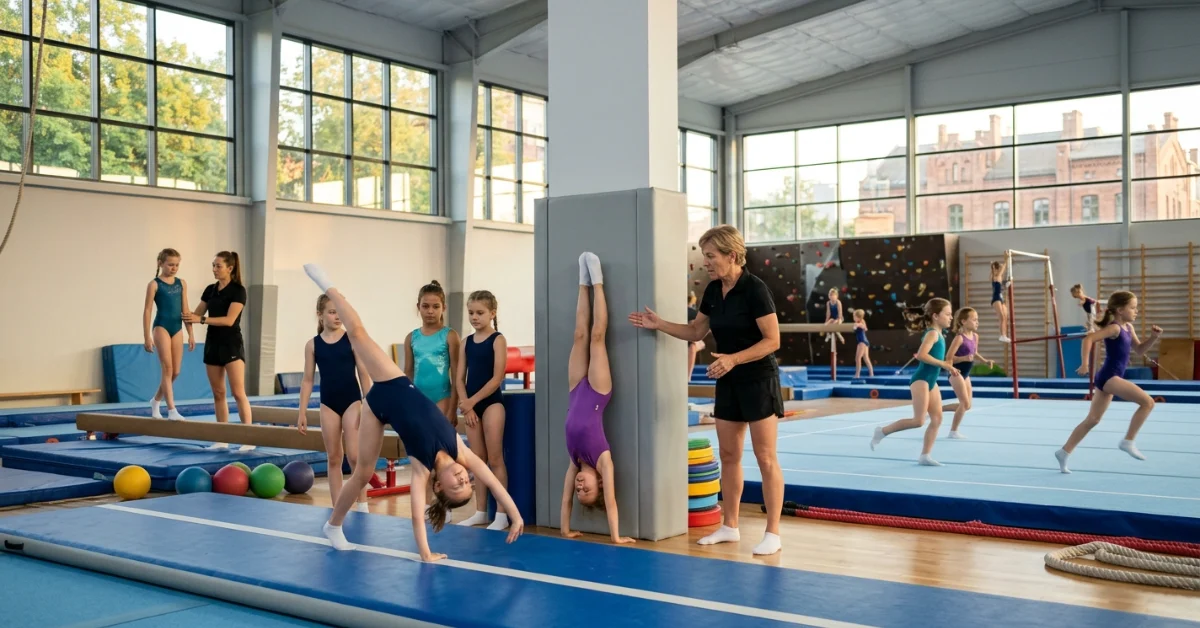
A gymnastics coach has spent eight years teaching in someone else's club. She knows her kids: which ones are scared of the vault and which ones ask for one more roll. One day a parent says, "If you ever opened your own gymnastics school, we'd follow you." That is how the road to your own gymnastics academy usually begins: with good coaching craft first, and only then the questions about paperwork, venue, insurance and pricing. Gymnastics is a sport where falling is part of learning, so safety shapes almost every decision at the start. Below we go through them one by one.
Note: this article is general guidance, not legal advice. Rules differ between countries (for example the UK, Ireland, the US, Canada and Australia), so check business registration, insurance and child safeguarding requirements with your local business registry or tax authority, an accountant and an insurer.
Gymnastics academy programme: discipline, age and local market
Before you deal with paperwork and a hall, answer one question: which kind of gymnastics do you want to teach? Artistic gymnastics, rhythmic gymnastics, acrobatics and general-fitness gymnastics for preschoolers are different programmes with different equipment and different coaching qualifications. Age bands matter just as much: a class for three- to six-year-olds (play, basic coordination) looks nothing like systematic technical training for primary school children.
The narrower your profile at the start, for example only the youngest age groups with no competitive ambitions, the easier it is to find your first gymnasts and the simpler your message. Many academies begin with one or two groups and add levels only once they have a stable base.
Also look at what already exists nearby: which gymnastics clubs and academies operate in your area, what they charge for memberships, and whether you can stand out through the quality of your equipment and your safety standards rather than through price alone.
Setting up a gymnastics club: business structure, insurance, consents
Running an academy is a business, so sort out the legal side before you accept the first payment. For one person, the usual choice is to work as a sole trader or self-employed professional, registered with the business registry or tax office in your country. If several coaches open the academy together, or a coach brings in an investor, consider a company, especially if you will have a larger lease, employ staff or want to limit personal liability. Discuss the choice with an accountant or a lawyer while you are still planning.
Gymnastics carries a risk of falls and overuse injuries, so before the first session, including a trial one, prepare:
- public liability insurance for the business and, after talking to an insurer, personal accident cover for participants,
- class rules and a registration form with the parent's details, a contact number and information about the child's health,
- written parental consent for the child to take part,
- rules for handling the personal data of children and parents.
The exact scope of insurance and the requirements for classes with children depend on the rules in your country and on the landlord of the hall, so agree them with your insurer and the venue owner.
Gymnastics hall: mats, equipment and ceiling height
A gymnastics hall has different requirements from a fitness studio or a dance room. Check three things first:
- Mats and landing zone. Rolls, jumps and apparatus work need properly thick mats. A thin mat on a hard floor is a direct route to injuries.
- Ceiling height. Bars, rings and jumps need far more headroom than a standard commercial unit offers. This is a common reason why popular premises turn out to be unsuitable.
- Specialist equipment. A beam, bars, a vault box or a mini trampoline is a big expense, but without them it is hard to teach real gymnastics elements rather than general fitness.
Special tip: before you sign a lease, visit the hall with a coach and set up your stations on the spot: where each apparatus stands, where the mats lie, how children move between stations. Ten minutes of this "trial circuit" reveals problems with the ceiling, columns or distance from the wall that you cannot see on the floor plan.
To start, many academies rent hours in a school or club sports hall that already has equipment. It is a sensible way to test demand without much risk. Your own hall makes sense only once the number of groups is stable and predictable.
Gymnastics academy staff: coach qualifications and spotting
If you coach alone at the start, quality is in your hands. Growing an academy, however, means more coaches, and spotting a child on an apparatus is a different responsibility from running general movement classes. When hiring, check for coaching qualifications specific to gymnastics (not only general physical education) and for practical spotting skills, which a certificate alone cannot show. Requirements for qualifications, certificates and background checks of people who work with children differ between countries, so check the rules in your country and the guidance of your national gymnastics federation. First aid training is a sensible minimum whatever the rules say.
Instructors usually work on a freelance basis, through their own business or, in a larger academy, as employees. Whatever the form, agree in writing the rate per class or group, the rules for cancelling sessions and who pays for the instructor's insurance. A good habit is to have a "backup coach": one person who can take over a group if the regular coach falls ill. For more on building a team, see our article on how to build a coaching team.
Gymnastics classes for children: offer and timetable
Start modestly: one or two age groups, classes once or twice a week in the afternoon, after nursery and school. A steady, predictable timetable builds trust better than a wide but constantly changing offer. When groups fill up, add more age bands and levels.
Plan trial classes or an open day, because that is the best way for parents to see what their child's training looks like. We describe how to organise them in free trial classes and open day for a sports academy. For spotting reasons, also set a maximum number of children per coach; more on this in the article on class size limits.
Gymnastics academy pricing: memberships, joining fee, camps
The payment model affects cash flow as much as the number of participants. The approaches below can be combined.
- Monthly membership: a fixed amount for a set number of classes. It is predictable, but you must watch renewal dates, because the parent decides whether to extend.
- Joining fee and sibling discount: a one-off fee at first sign-up (it can cover, for example, a leotard or club kit) and a discount for a second child from the same family increase loyalty at no marketing cost.
- Shows and camps: an end-of-term show lets parents see progress, and a holiday camp sells as a separate package.
Whatever the model, write the rules down: whether a membership rolls over to the next month, what happens with missed classes, how refunds work if a child is injured for a longer time. Missing rules are a common source of misunderstandings. You will find ideas for promotions and discounts in the article on pricing and promotions for a sports academy.
First children for your gymnastics academy: local marketing
The first participants rarely come from online ads; more often they come from a local presence and recommendations. What works at the start:
- a Google profile with address, opening hours and photos of the hall, because that is where a parent looking for gymnastics classes nearby will look (see Google business profile for a sports academy),
- free trial classes or an open day,
- contact with nurseries and primary schools: a poster or a short demonstration at a fair,
- recommendations between parents, for example a small discount for both families,
- short clips from classes and shows, but only with parents' consent to publish images of children.
We cover reaching parents more broadly in the article on local marketing for extracurricular activities.
How we solved bookings and scheduling for gymnastics in MyClass
With one group, a spreadsheet and a parents' chat are enough. The trouble starts when you have several age groups, several coaches, passes that end on different days and popular age bands with a waiting list. We built MyClass so that you can run all of this in one place:
- Groups and timetable: a gymnastics group has weekly recurring sessions, and you mark holidays and breaks in the calendar when creating sessions. You describe the skill level in the group name or description.
- Hall and location: you enter the hall or location and get a warning when two groups want the same hall at the same time.
- Sign-ups and limits: a parent books their child online for a specific session, and we enforce the group's place limit. By default an administrator approves each booking. When a group is full, the child goes onto a waiting list and moves up automatically when a place frees up.
- Consents: the parent gives guardian consent for the child's participation once, and the client card shows consents to the rules, accident insurance and data protection (GDPR).
- Attendance register: the coach marks attendance on a phone, and the parent sees the child's latest classes in their account.
- Passes: you define a pass with an entry limit and/or validity period, and when a pass is running out we send the parent a reminder by email, provided the school has switched email sending on.
What we don't do: there are no online payments for classes, so you record payments by hand. There is no separate trial-class type and no make-up classes, and you can cancel a session but not move it to another date. We warn about hall clashes only, not coach clashes, and we don't send text messages. You handle these things with a rule in your class terms. Want to try it on your own group? See the pricing or create an account. You will find more detail in the articles on online class booking for a school or club and the online attendance register.
Common mistakes when starting a gymnastics academy
- Saving on mats and safety equipment. This is the one place where cutting costs directly raises the risk of injury.
- No written consents or class rules. Parental consent and contact details in case of injury are the minimum.
- An offer that is too wide at the start. Many levels with few children blur the groups and the timetable.
- Marketing only online. Nurseries, schools and parent recommendations usually bring the first participants faster.
Pre-opening checklist for a gymnastics academy
- A defined programme, age group and level for the start.
- Business registered or company set up, and liability insurance in place.
- Class rules, parental consents, a registration form and participant insurance agreed with your insurer.
- A hall with suitable mats and ceiling height, even if rented by the hour.
- Coaches with gymnastics qualifications, the background checks required in your country and clear contracts.
- A modest, steady timetable for the first groups, plus trial classes.
- A written price list: memberships, joining fee, shows and camps.
- A plan for the first participants: Google profile, nurseries, schools, recommendations.
- A way of handling bookings, attendance and passes that will not collapse when you add a second group.
For a broader view of paperwork and starting a club, see the article how to set up a sports club.