How to Start a Padel Club: Courts, Booking, Pricing
Courts and halls, court booking, pricing, coaches, leagues and tournaments. How to start a padel, squash or badminton club, with a sample court occupancy calculation.
Friends from work spend every week hunting for a free court, ringing round venues, and the best after-work slots are already taken. You see an idea in that: a club where booking takes a minute and league matches fill Friday evenings. How do you start a padel, squash or badminton club so that the courts are actually used, not just nice to look at? Below are the decisions you need to make, from choosing the sport to the way you sell court hours.
Note: this article is general guidance for several countries (for example the UK, Ireland, the USA, Canada and Australia) and is not legal advice. Rules differ from country to country and change over time, so check business registration, insurance, planning and noise requirements with your local council or business registry, an accountant and an insurer.
Starting a racket sports club: which sport to choose
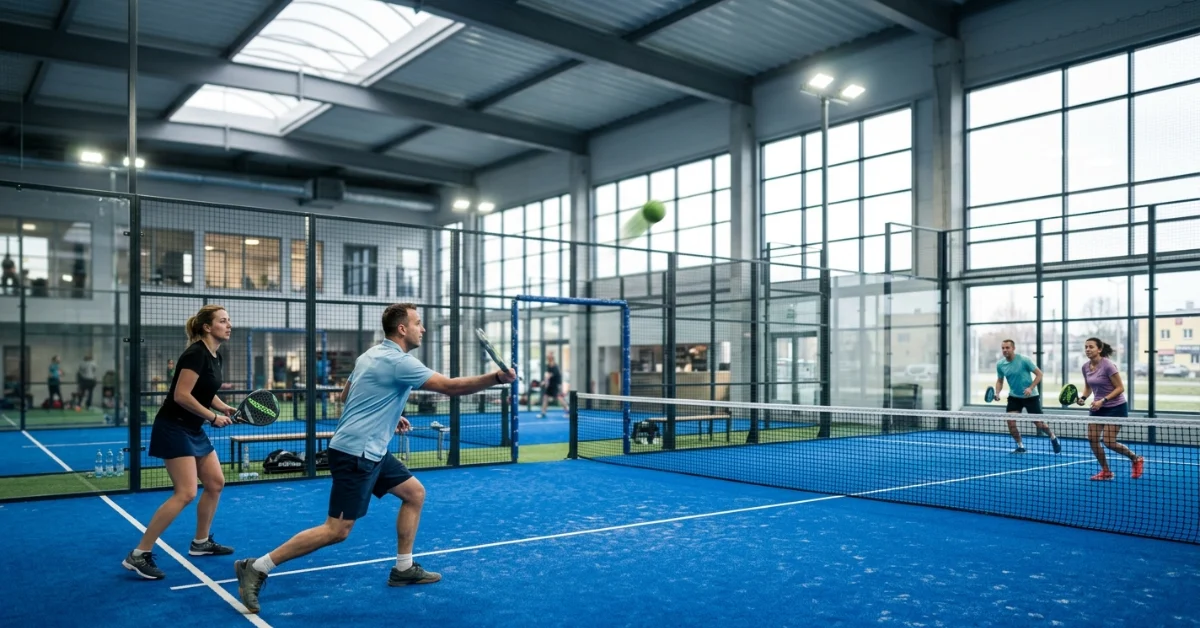
The first decision is the sport, because the whole investment depends on it. Padel is played in fours on a court with glass walls, often outdoors or under a cover. It is easy for beginners and sociable, so it suits a club built around leagues. Squash needs enclosed indoor courts and good ventilation. Badminton needs a hall with a high enough ceiling and no draughts, which disturb the shuttlecock's flight.
Think about whether you start with one sport or build a multi-sport venue. One sport simplifies management and communication, several raise occupancy outside peak times. Check the real demand in your area and what the competition looks like: the number of courts in town, the price per hour, the busiest times.
Padel, squash or badminton club paperwork
Most people start as a sole trader, set up a company, or form a non-profit association or sports club. Each structure has different tax obligations, so talk it through with an accountant. Whatever the structure, prepare:
- public liability insurance that covers the sports facility and classes,
- house rules for the venue and classes, plus a declaration accepting risk,
- rules for handling your clients' personal data.
If you plan to build or convert a venue, check the requirements on land use, permits, fire safety and noise in the rules that apply in your country and with your local authority. Outdoor padel is also a matter of lighting and neighbours, because play against glass walls is loud.
Padel courts or a hall: building, renting or converting
The biggest decision is the location and the form of investment. Building new courts means a high start-up cost: surface, walls, lighting, a cover or a hall. Converting an existing hall, for example a warehouse, lowers the cost but means checking the height, floor load and lease terms. For a first-time investor, a sensible option can be to work with an existing venue: renting hours, running a section or a commission model.
When choosing a location, check:
- access and parking, because clients arrive after work and at weekends,
- court lighting and noise towards the neighbours,
- changing rooms, showers and a lounge area that lengthens the visit,
- the option to add more courts if demand grows.
What it costs to start a padel or squash club
Costs depend on the sport and the scale. Items in order of weight:
- building or converting courts, or rent for a hall,
- utilities and lighting, plus heating for indoor venues,
- salaries for coaches and reception,
- insurance, accounting and surface maintenance,
- equipment: rackets to hire, balls, nets, changing rooms,
- marketing, a booking system and a reserve for the first months.
Example (hypothetical figures, not a price list, amounts in pounds are illustrative): running one court costs £1,200 a month (rent or loan repayment, utilities, maintenance), and an hour of play costs clients £40. To cover costs you need 30 booked hours a month. With 12 hours available a day and 30 days, there are 360 hours, so break-even occupancy is about 8%. In practice occupancy is very uneven: evenings and weekends full, mornings empty. So profitability depends on filling off-peak hours, for example with leagues, coaching, corporate bookings and a lower price at less popular times.
Court booking and pricing: how to sell hours
In a racket sports club you sell court hours, so the booking system is the heart of the business. Clients expect easy online booking, a clear view of free slots and the ability to cancel. Set clear rules: how late you can cancel free of charge, what happens if someone is late and how hours are counted.
Pricing split into peak and off-peak helps fill the court at less popular times. Passes also work well (for example a bundle of hours at a lower price), as do memberships with a discount on bookings and fixed slots for groups that play together every week. Decide whether you sell a court hour (one price for four people) or entry per person, because that changes your communication and billing. We cover pricing more broadly in the article pricing and promotions for a sports academy.
Padel, squash and badminton coaches and playing levels
Sessions with a coach fill off-peak hours and build loyalty. Look for coaches with qualifications and experience of working with beginners, because most new players don't know the technique. Plan courses for beginners (for example a few sessions), intermediate groups and junior training, which builds a new client base. When working with children, check the rules on qualifications and safeguarding that apply in your country. You can read about the team in how to build a coaching team.
Set playing levels and mark them in your offer so players find partners of similar ability. Playing at very different levels is discouraging and a common reason why new clients leave.
Leagues, tournaments and community in a racket sports club
Leagues and tournaments are the most effective way to keep courts consistently busy and to build a community. A league played at fixed times gives predictable income, and players come back because they have matches to play. Organise tournaments for beginners and intermediate players, company events and evenings for people without a playing partner. A lounge area and a cafe lengthen the visit and bring extra income.
First clients: a free first hour
Start with trial sessions and an open day, which we describe in free trial classes and open day for a sports academy. Set up a Google Business Profile with reviews, work with companies (team-building tournaments), local clubs and schools, and create a players' group on social media where you arrange games together.
Special tip: give people who have never played their first hour with rackets included in the price. It removes the biggest barrier to entry, and after the first match people ask about further slots themselves.
How we solved bookings and scheduling for racket sports in MyClass
With several courts and hundreds of bookings a week, a spreadsheet stops being enough. In MyClass it works like this:
- Groups with recurring slots: a regular league, a beginners' course or a weekly company game is a group with a weekly template. A client books a specific date.
- Spot limits: you set the limit on the group, the template or the session, for example four people per court in padel.
- Waiting list: when someone cancels from a full session, the first person in the queue moves up automatically and gets an email. It is a way to fill gaps.
- Rooms and locations: you can describe each court as a separate room, and add locations if you have several venues.
- Attendance list on the coach's phone and passes with an entry limit and/or an expiry date, with an email when entries run out.
What we don't do: we don't have bookings for single court hours with a separate peak and off-peak price list, because you assign the price to a group or template. We don't take online payments from clients, there is no separate trial class type or make-up class, and you can't move a session to another date, only cancel it. Check the pricing or create an account. We write about bookings in online class booking for a school or club and about the queue in class waiting list.
Checklist before opening a padel, squash or badminton club
- A chosen sport and an analysis of local competition.
- Business structure, liability insurance and house rules for the venue.
- A location with parking, lighting and consent for noise.
- A cost calculation per court and the break-even occupancy.
- A booking system with clear cancellation rules.
- Peak and off-peak pricing, passes and memberships.
- Coaches, beginner courses and playing levels.
- Leagues, tournaments and a plan for getting players: open day, Google profile, companies.
You will find ideas for local promotion in local marketing for extracurricular activities. Related topics: how to set up a sports club and how to start a tennis school.