How to Start a Horse Riding School: Horses, Yard, Costs
How to start a horse riding school: the type of lessons, yard and arena, insurance, the cost of keeping horses, animal welfare, instructors, pricing and bookings, with a hypothetical cost per riding lesson.
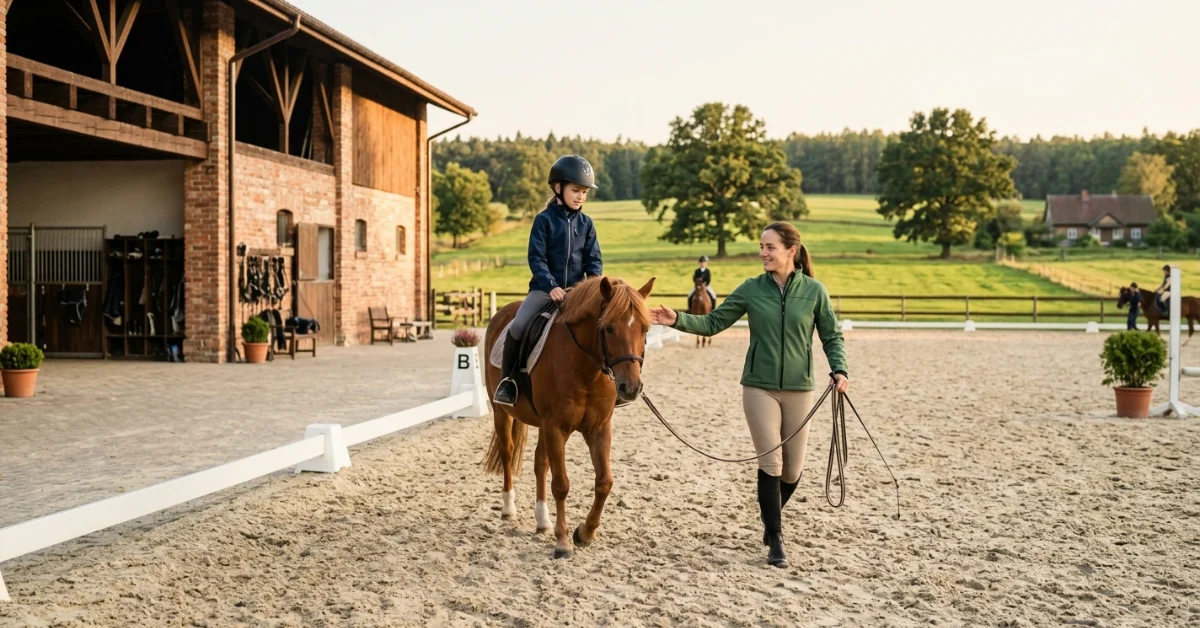
A riding instructor has spent eight years teaching in someone else's yard. She knows the horses, she knows the parents, and she knows which pony loves children and which one needs a quiet hand. Then the yard owner raises the rent, and the question comes up: is it time for a place of her own? Opening your own horse riding school, riding centre or equestrian club is one of the most demanding kinds of sports business, because horses have to be fed, treated and rested whether the lessons are full or not. Below we explain how to start a horse riding school that is safe, good for the animals and sustainable to run.
Note: this article is general guidance for several countries (for example the UK, Ireland, the US, Canada and Australia) and is not legal advice. Business registration, rules for premises with animals, and insurance differ from country to country, so check with your local business registry or tax authority, an accountant, an insurer and your national or regional equestrian federation.
Horse riding school: lesson types and target group
The first decision is the type of lessons. A riding centre can offer beginner lessons (on the lunge and in groups), leisure hacks, sport training (dressage, jumping, cross-country), classes for children and, with the right qualifications, therapeutic riding. Each profile needs different horses, different staff and different facilities.
The easiest start is teaching children and adult beginners on calm, experienced school horses. Also decide whether the school will have its own yard or begin in partnership with an existing centre. Your own yard gives you control over the quality of care, but it means high fixed costs.
Setting up a riding school: legal form and insurance
Most people choose to trade as a sole trader, set up a company, or run a non-profit riding club. A club structured as a non-profit association can make it easier to enter competitions and join a federation, but every form comes with different tax duties, so talk it through with an accountant. Whatever form you choose, prepare:
- public liability insurance that covers teaching riding and the animals,
- the rules of the centre and a rider's declaration accepting the risks, plus parental consent for minors,
- rules for handling riders' personal data.
Ask the insurer directly what the policy covers (a fall, a kick, a bite, damage caused by a horse) and what it requires in terms of instructor qualifications and the number of riders per instructor. Also check the rules in your country and with the relevant authority on premises with animals: horse registration, housing standards and veterinary supervision.
Yard, arena and indoor school: the place for an equestrian centre
After the horses, the premises are your biggest cost and the main condition of quality. You need stables or paddocks, an outdoor arena, ideally an indoor school or covered arena so lessons do not depend on the weather, plus a tack room, feed storage and a changing room for riders. When choosing a location, check:
- access to paddocks, grazing and hacking routes,
- the quality of the arena surface, which affects the horses' health and riders' safety,
- access and parking for parents who bring their children,
- the lease terms, including the landlord's consent to lessons involving animals,
- the neighbours: smell, noise, vehicle traffic.
A sensible option at the start is to lease part of an existing yard, run a training section there, or use a commission model.
How much does it cost to start a horse riding school
Cost items in order of weight:
- keeping the horses: feed, bedding, vet, farrier, worming, animal insurance,
- premises: rent or depreciation of the yard, arena and indoor school,
- pay for instructors and yard staff,
- equipment: saddles, bridles, riding hats, body protectors, grooming kit,
- insurance and accounting,
- marketing, booking software and a reserve for treating the horses.
A hypothetical example, not a price list (figures in £, purely for illustration): keeping one school horse costs £900 a month, and the horse works 3 hours a day, 5 days a week, which is about 60 hours a month. So the horse costs £15 per working hour (900 divided by 60). The instructor charges £40 for a group lesson of 4 riders, which is £10 per rider. That alone comes to £25 per rider per hour before you add premises, insurance and a reserve. The horse costs the same whether it works or not, so profitability depends on filling the timetable and spreading the work so that no horse is overloaded.
Horse welfare in a riding school
A good riding school treats welfare as a condition, not an extra. Set limits on how much the horses work (hours per day, rest days per week), and provide feed, regular veterinary and farrier care, turnout and contact with other horses. School horses should be calm and well schooled, and matched to the riders' level: beginners need patient, predictable horses.
Plan a rotation so that every horse has days off. An overworked animal suffers and is a danger to the rider. Parents look ever more closely at how a centre treats its horses, so good care also builds your reputation.
Special tip: keep a simple card for every horse: how many hours it worked this week, when it last saw the farrier and the vet, and which riders it can be given to. Before you build the lesson timetable, you check the card, not your memory. When an instructor changes or a horse comes back from treatment, nobody has to guess.
Riding instructors and rider safety
The instructor is responsible for the rider and the horse at the same time. Look for coaches with a riding teaching qualification, experience with beginners and children, and knowledge of first aid. Qualification requirements depend on the rules, the federation and the policy, so check them in your country. We describe how to build a team in the article on how to build a coaching team.
Write down the safety rules: a riding hat designed for horse riding, suitable footwear, a body protector for jumping and hacking, the number of riders per instructor, a check of saddles and girths before every lesson, rules for leading and approaching horses, and a procedure after a fall or a head injury. The yard must have a first aid kit and an emergency number. Hacking needs extra procedures and experienced horses.
Types of riding lessons and pricing
You can divide lessons into private lunge lessons, group riding lessons, leisure hacks, sport training, and holiday camps. Base your prices on the calculation from the earlier section. Passes for several rides and monthly subscriptions with a regular slot work well. Price private lessons higher than group ones, because they take the full attention of the instructor and the horse. For promotion ideas, see our text on pricing and promotions for a sports academy.
Set a cancellation policy: horses and instructors are paid regardless of attendance, so a last-minute cancellation should mean losing the ride or paying a fee. Describe separately what happens to a ride cancelled because of the weather (strong wind, a storm, a slippery arena).
Seasons and weather in riding
Without an indoor school, riding depends on the weather. For winter, plan lessons in the indoor school, theory sessions (horse care, safety rules) and yard workshops. In summer, camps and holiday courses work well, but school holiday dates differ between countries and regions, and between the northern and southern hemispheres, so plan according to the calendar where you live. Horses need care all year round, so your financial plan has to survive the months with lower attendance. We write more about this in the article on seasonal campaigns for a sports academy.
First riders for a riding school
Parents and adults look for a school nearby, so start locally: a Google Business Profile with reviews (see Google Business Profile for a sports academy), partnerships with nurseries and schools, and an open day with short rides and a trial lesson. We describe the open day format in the guide to free trial classes and an open day for a sports academy.
An idea typical for this field is a "day with a horse" for children: grooming together, feeding and a short ride under the instructor's eye. The parent sees how the school looks after its animals, and the child starts to make friends with the horse, which raises the chance of regular attendance. Publish photos of children only with parental consent.
How we solved bookings and scheduling for a horse riding school in MyClass
A riding school has two timetables: one for people and one for horses. In MyClass we run the first one. We set up lesson groups as classes with a weekly recurring slot (day, hours, instructor), with a place limit matched to the number of horses and instructors. The arena and the indoor school are entered as rooms, so the system warns you when two groups want the same room at the same time. If you have several centres, we add them as separate locations. Parents book online for a specific slot, and when a ride is full they join a waiting list and get a place automatically when someone cancels. The instructor marks attendance on a phone, straight from the yard. We keep passes for several rides in the system, and a reminder about a pass running out goes out by email, provided the school has email sending turned on. A ride cancelled because of the weather is cancelled in the panel with the right reason, and the people booked in are notified. You can check plans and prices in the pricing, and you can set up your first group by creating an account.
What we don't do: we don't keep the horses' timetable, so animal cards, work limits and farrier visits stay outside the system. There are no online payments from customers for rides and passes, so you settle those yourself. There is no separate trial lesson type, so we set a trial lesson up as a regular slot with a description. There is no make-up class or rescheduling function: you replace a cancelled slot with a new one. We also don't check whether a particular rider suits a particular horse. Riders' levels are not in a separate field, so we describe the level in the group description. We write more about bookings in the article on online class booking for a school or club, and about setting capacity in the text on class size limits.
Checklist before opening a horse riding school
- A chosen profile: riding lessons, leisure, sport, classes for children.
- A legal form, public liability insurance and rules with a rider's declaration.
- A yard, arena or indoor school, and an operation that complies with the rules on keeping animals in your country.
- School horses matched to the riders' level and a veterinary care plan.
- A cost calculation for one riding hour and a break-even point.
- Qualified instructors and written safety rules.
- Prices, a cancellation policy and a plan for winter and bad weather.
- A recruitment plan: open day, Google Business Profile, partnerships with schools.
Related guides: how to set up a sports club and how to start a ski school, another seasonal outdoor discipline.