How to start a volleyball club: venue, league, teams
From Thursday games in a hired school gym to a club with a league: venue, format, teams, referees, pricing per player or per team and attendance, with a sample cost calculation and answers to common questions.
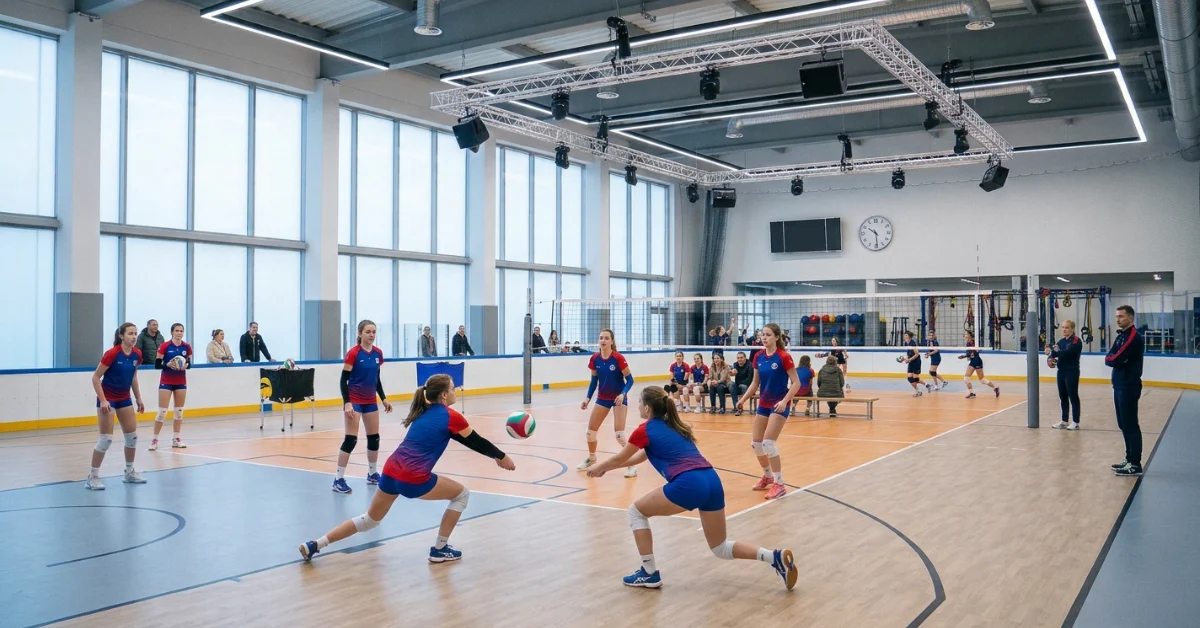
For three years you have played on Thursdays in a hired school gym. Some weeks there are sixteen of you, some weeks eight, and the list of people who want to play lives in the organiser's phone and a group chat. Someone asks if they can bring a friend, someone else asks whether there is a team for beginners. At some point you realise that a group of friends has turned into a section that needs organising: a venue, a coach, a fixture list, payments. This article shows how to start a volleyball club (or a training group) so that the hall is full and players come back every week, whether you end up as the head coach, the instructor or simply the person who books the court.
Note: this article is not legal advice. Rules, required qualifications and insurance differ between countries (for example the UK, Ireland, the US, Canada and Australia), so check the legal form and the insurance policy against the rules that apply in your country, with an accountant and with your insurer.
Starting a volleyball club: open sessions, a league or coaching
The first decision is the format. You can run open sessions where players sign up one by one, an amateur league with teams and a fixture list, coaching for beginners led by a teacher, or a mix of the three. Open sessions are the easiest to launch and a good way to bring in new people. A league builds steady attendance and a community, and coaching attracts those who want to learn technique.
Decide who the club is for: adult amateurs, people returning after years away, teenagers, mixed, women's or men's teams. Mixed groups are popular because they combine a social evening with sport. A clear split into levels (beginner, intermediate, advanced) means nobody feels lost and nobody gets bored.
Legal form and insurance for a volleyball club
The organiser can operate as a sole trader or small business, a company, or a non-profit association or sports club. An association makes it easier to enter official competitions and apply for grants, while a business is simpler when you charge per person. Each form has different tax duties, so talk to an accountant before you choose; a general picture of the options is in how to set up a sports club. Whatever the form, prepare:
- public liability insurance that covers training sessions and matches,
- rules for sessions and the league, plus a participant declaration about health and acceptance of risk,
- a policy for handling players' personal data.
Ask your insurer whether the policy covers league matches and whether players should hold their own personal accident cover. In volleyball the typical injuries are sprained ankles and finger and shoulder injuries, so keep a first-aid kit and make a proper warm-up part of every session.
Choosing a volleyball hall: hiring hours and what to check
The hall is your biggest cost and your most important contract. Amateur clubs mostly hire hours in school gyms or sports halls. When you choose a venue, check:
- ceiling height and floor condition, because volleyball needs enough clearance above the net and a surface that does not slip,
- whether posts, nets and court markings are provided or whether you must bring your own,
- availability at the times your players want (evenings and weekends),
- changing rooms, showers and space for substitutes,
- the cancellation and refund terms when the hall is unavailable.
It pays to negotiate fixed hours for the whole season instead of one-off bookings: it is usually cheaper and players get a predictable schedule. Ask about several courts in one hall, because then the league and open sessions can run at the same time.
What a volleyball club costs: hall, coach and attendance
A volleyball club has a fairly low entry threshold because you do not need your own hall. Costs in order of weight:
- hall hire (the largest item),
- fees for coaches and referees,
- equipment: balls, nets, posts, first-aid kit, markers,
- insurance and bookkeeping,
- prizes, shirts and medals for the league and tournaments,
- marketing, sign-up tools and a reserve for cancelled sessions.
Example (hypothetical figures in pounds, illustrative only, not a price list): an hour in the hall costs £40, and the coach or referee adds £20, so £60 per hour in total. With 12 players at a session that is £5 each, with 6 players it is £10. You need six players per side plus substitutes, so cancelling a session because of low turnout is a common volleyball problem. Set a minimum number of sign-ups below which the session does not go ahead, and remind people of the deadline.
Special tip: set a decision hour, for example 24 hours before the session. If fewer people have signed up than you need for two teams of six, you either cancel or call people from the reserve list. Players learn to confirm quickly when they know that something is decided at 6 pm the day before.
Running an amateur volleyball league: fixtures, rules, referees
A league is the most effective way to get steady attendance. Decide how many teams you want, the format (round robin, groups, play-offs), the length of the season and a fixture list so that matches fall on fixed days. Write down the rules: team size, minimum number of players, substitutions, walkovers, penalties for not turning up and fair play. Decide who referees: hired referees, players in turn, or the coach.
League fees are usually charged per team: the season entry fee covers hall hire, referees and prizes. A clear results table and a visible fixture list online build engagement. Consider league levels (for example beginner and advanced) so that teams play opponents of a similar standard.
The volleyball coach and beginner classes
For people who have never played, classes with a coach are the best way in. Look for instructors with the right qualifications and experience with adult beginners: they teach the basics (passing, serving, receiving, positioning) through games and bring in match play gradually. Check the required qualifications with your insurer and your national or regional volleyball association. How to find and assess candidates is covered in how to find a coach or instructor for your school and how to build a coaching team.
A beginner course (say 6 to 8 sessions) can end with a friendly match and an invitation to open sessions or to the league. Mark the levels in the sign-up form, because playing with people far above their level discourages newcomers, while sessions that are too easy bore the advanced players.
Volleyball club pricing: per player or per team
For open sessions a pay-as-you-go fee or a pass works (for example eight sessions at a lower price per visit), and in the league you charge an entry fee per team. Base your pricing on the calculation in the cost section. Passes and memberships improve attendance, because people who have paid upfront are more likely to show up. State clearly how late a player can cancel, what happens with absences and how visits are counted. A discount for players who bring in new people works well. More on building prices is in pricing and promotions for a sports academy.
Finding the first players for your volleyball club
Players look for a club nearby, so start locally: Facebook groups, apps for organising games, companies, universities and neighbouring clubs. Hold an open day with free trial games, as in free trial classes and open day for a sports academy. Set up a Google business profile with training times and photos (with the consent of the people in them) and a group for players where you publish the fixture list. More ideas for local recruitment are in local marketing for extracurricular activities.
Special tip: a volleyball-specific idea is singles nights, where people without a team turn up and the organiser draws the line-ups. For the league it is a steady flow of players into new teams, and for newcomers it is the easiest way to try a club without knowing anyone.
How we solved sign-ups and scheduling for a volleyball club in MyClass
In MyClass we run volleyball sessions as groups with recurring slots (weekly): day, hours, the hall as a room or location, the coach and a limit of places. When signing up, a player picks a specific date. When a session is full, the player joins the waiting list, and when someone cancels, the first person on the list moves up automatically. An administrator can raise the limit for a single session or add a person over the limit. The attendance list is on the coach's phone (present, late, absent, excused), and a pass for several visits is used up when a player attends. A beginner package is run as a course, and an integration tournament as a one-off event with a limit and a price. If two classes clash in the same room the system warns you, and cancelling a session notifies the people signed up.
What we don't do: there is no league, match fixture list or results table, so team line-ups and results are kept outside the system. Players sign up individually, not as a team. We don't cancel a session automatically when too few people have signed up; that is the organiser's decision. We don't take class payments online, and you mark "paid" by hand. There is no separate type for trial classes, make-up classes or moving a session to another date (you can cancel it and add a new one). The details are covered in articles on online class booking, class size limits, the waiting list and the online attendance register. Want to try it on your own sessions? See the pricing or create an account.
Checklist before opening a volleyball club
- Chosen format: open sessions, a league, beginner classes.
- Legal form, public liability insurance and rules with a participant declaration.
- A hall contract with fixed hours and equipment.
- Cost per session worked out and a minimum number of players.
- A coach and beginner classes with levels.
- League: fixture list, rules, referees and fair play.
- Pricing: single visits, passes and a team entry fee.
- Recruitment plan: local groups, an open day, companies and universities.