How to start a yoga studio: style, room, pricing
How to start a yoga studio after years of teaching in someone else's space: choosing a style and audience, formalities, the room, teachers, pricing, your first students and how to organise bookings.
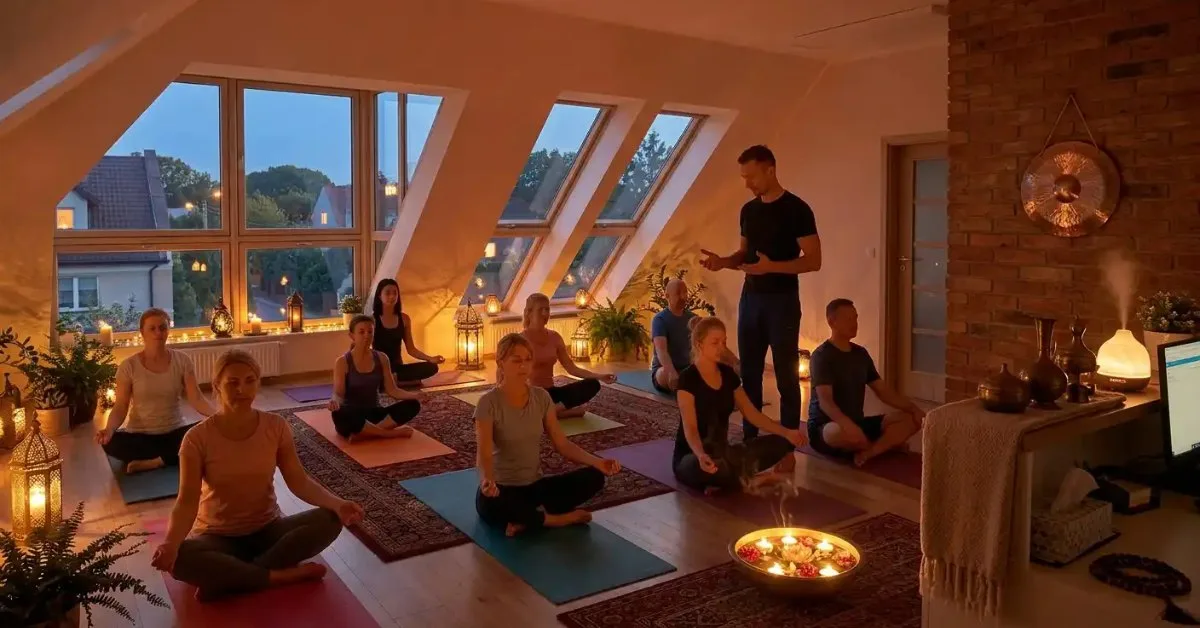
A yoga teacher has been leading classes for a few years at a fitness club and a community centre. The groups are full, students keep asking whether she will open a place of her own, and she is wondering what actually separates renting a room by the hour from running a studio. The answer is paperwork, the choice of style and room, a team of instructors, pricing and day-to-day organisation. Below we describe how to start a yoga studio so that it launches calmly and survives its first year.
Note: this article is general information, not legal advice. Rules, insurance requirements and consumer law differ between countries (for example the UK, Ireland, the US, Canada and Australia), so check the formalities with your national or local business registration authority, an accountant and an insurer.
Starting a yoga studio: style, niche and target group
Before you deal with paperwork and the room, decide who you are opening the studio for. "Yoga" is a broad category: hatha and beginner or senior classes, vinyasa and power yoga for active people, prenatal yoga, classes for children and hot yoga are completely different experiences for completely different students.
The clearer your profile at the start, the easier it is to find your first students and the simpler your message. Successful studios often begin with one style and one group, and widen the offer only after they have built a regular base. Before you decide, look at the market:
- which yoga studios operate nearby and what they are missing,
- what passes they sell and whether you can compete on atmosphere and quality rather than on price alone,
- whether your target group lives within a sensible travelling distance: housing estates, offices, gyms with no yoga of their own.
Setting up a yoga studio: legal form and insurance
Running a yoga studio is a business like any other, and you need to register it before you take the first payment. If you start alone, most people choose to work as a sole trader or sole proprietor. If several teachers open the studio together, or a teacher partners with an investor, consider a company, especially when a larger lease, employees or limiting personal liability are involved. Talk through the legal form, contributions and taxes with an accountant, ideally before you sign the lease.
Yoga is a physical practice, so there is a risk of strain and injury, especially in dynamic styles. Ask your insurer about public liability insurance for your business, what the policy covers and whether it sets requirements for teachers' qualifications. Also prepare terms for your classes: information about health contraindications, rules on injuries and pregnancy, rules for cancelling classes and how you process personal data. One page is enough, but every student should accept it when they sign up.
The yoga room: floor, quiet and temperature
A yoga room has different requirements from a fitness hall. Watch for three things:
- Floor: wooden or padded, not slippery, and with good cushioning for standing and balancing poses. Cold concrete under thin flooring is a sure route to discomfort.
- Quiet and acoustics: yoga demands concentration, so insulation from the street and neighbouring rooms matters more than it does for energetic classes.
- Temperature and ventilation: classical yoga needs a stable, moderate temperature and good airing. Hot yoga also needs heating and humidity control, and the safe conditions should be agreed with a specialist and your insurer.
At the start many teachers rent a room by the hour at a community centre, a fitness club or another studio outside its opening hours. This is a good way to test demand without much risk. A studio of your own with a changing room and a reception desk makes sense only once you have a steady number of groups. Clean mats that students can borrow on site are often a reason to choose one studio over another.
Yoga teachers: qualifications and working together
If you teach alone, quality is in your hands. Growing the studio, however, means more teachers, and that is a different kind of responsibility. When you recruit, ask not only about their practice on the mat but about the teacher training course they completed (the scope and the recognised organisations vary, so check what your insurer and your students expect) and about their experience leading groups. We write more about building a team in our article on how to build a coaching team.
Choose the form of cooperation (employment, self-employed teachers invoicing you, or another arrangement) together with an accountant. In the agreement describe the rate, how either side cancels a class and who pays for the teacher's insurance. A good habit is a "back-up" teacher who can take over a class when someone is ill, so a group is never left without its practice.
Yoga classes and the timetable at launch
Start modestly: a few groups at two or three levels (beginners, general, experienced practitioners) at times that suit your students: mornings and evenings for people who work, mid-morning for parents of small children and for seniors. A fixed, predictable timetable builds trust better than a wide but chaotic offer. Add new times and styles when the groups begin to fill.
Think about trial classes too. They are the easiest way to convince people who are hesitating, and we describe how to run them in the article on free trial classes and an open day in a sports academy.
Yoga studio pricing: passes, bundles and workshops
Your billing model affects cash flow as much as the number of students does. You can combine approaches:
- Monthly pass: a fixed amount for a set number of visits or for unlimited classes. It gives predictable income, but you need to watch renewal dates.
- Class bundle and drop-in: for people who will not commit to regularity, for example a bundle to use within a few months. It is flexible but less predictable.
- Workshops and retreats: themed sessions (yoga for the spine, meditation, yoga nidra) and trips sell as a closed package with a date and a limited number of places. They bring extra income and a chance to meet people outside your regular groups.
From day one write down the rules: whether a pass rolls over into the next month, whether visits accumulate, and what happens during a longer illness or pregnancy. Missing rules are a common source of misunderstandings. You will find ideas for promotions in our text on pricing and promotions for a sports academy, and on counting visits in the article about attendance and class pass use. Set a maximum group size too, so that the teacher can correct poses individually.
Special tip: before you set a price, work out the break-even point for each group separately: divide the cost of the room and the teacher by the price of one class. A morning group of eight and an evening group of twelve have different profitability, and without the calculation both look as if they are "going well".
Finding the first students for a yoga studio
The first group rarely comes from online ads. More often it comes from a local presence and recommendations. At the start these work well:
- a Google business profile with the address, opening hours and photos of the room (see Google business profile for a sports academy),
- an open day or a free trial class for people who have "always wanted to try",
- partnerships with local businesses: gyms with no yoga of their own, physiotherapy practices, companies (classes for employees),
- a friend's recommendation with a small benefit for both sides,
- short clips from classes on social media, because in yoga atmosphere and community sell better than a description.
Publish photos and recordings of students only with their consent. We write more about local activity in the article on local marketing for extracurricular activities.
How we solved enrolment and scheduling in a yoga studio in MyClass
With one group, a spreadsheet and a messaging app are enough. The trouble starts with several groups, several teachers and passes that expire on different dates. In our system every yoga group has a weekly recurring slot (day, hours, teacher) and a limit on places, because when you correct poses what counts is how many people fit in the room. Rooms and locations are entered separately, and the system warns you when two groups want the same room at the same time. Students sign up online for a specific session, and when a class is full they join a waiting list and get a place automatically after someone cancels. The teacher marks attendance on a phone, right on the mat after class. Passes (number of visits, validity in days) are assigned to students and a visit is used up when they attend, and an email about a pass that is running out goes out if the school has email sending switched on. We run workshops as separate events with a limit of places and multi-session series as courses. Plans and prices are on the pricing page, and you can set up your first group after you create an account.
What we don't do: there are no online payments from clients for classes and passes, so you settle them yourself and mark them as paid manually. There is no separate type of trial class, so you set a trial class up as a regular session with a description. There are no make-up classes and no moving a session to another date: you replace a cancelled session with a new one. A group's level has no field of its own, so you describe it in the group description. We cover the wider rules of booking in the article on online class booking, and popular classes with a queue in the text on the class waiting list.
The most common mistakes when starting a yoga studio
- Prices too low at the start. Underpricing makes a later increase harder and signals low value.
- No written rules with students (terms, refunds, contraindications) and with teachers (rates, cancellations).
- An offer that is too wide for a small number of students, which dilutes the groups and makes a steady timetable hard.
- Skipping local marketing in favour of paid ads alone.
- Running everything by hand for too long, because every hour spent on payments and reminders is an hour not spent teaching and growing.
Checklist before opening your yoga studio
- A defined yoga style and target group.
- A registered business, liability insurance and a way of accounting agreed with an accountant.
- Terms with health contraindications and refund rules.
- A room with a good floor, acoustics and ventilation, even if rented by the hour.
- Teachers who have completed a training course, clear agreements and a back-up person.
- A modest, predictable timetable for the first groups, plus trial classes.
- Pricing: passes, bundles or workshops, with rules on what happens to unused visits.
- A plan for your first students: Google business profile, open day, local partners.
- A way to handle bookings and attendance that will not fall apart with the second group.
A related guide for another movement practice is how to start a pilates studio.