How to Start a Pilates Studio: Format, Space, Staff
Mat or reformers, the space, certified instructors, contraindications, timetable and pricing. How to start a Pilates studio, with a sample cost calculation, a checklist and answers to common questions.
She has taught for eight years in other people's studios: Monday at one, Thursday at another, Saturday in a hired hall. By now she knows which classes fill themselves and which ones lose clients after a month, and she increasingly thinks about a place of her own. It is a typical starting point: a Pilates teacher who has spent years working for someone else starts to wonder how to start a Pilates studio with full classes and costs under control. Pilates has loyal followers: people recovering from injuries, desk workers, runners, pregnant women and anyone who simply wants to look after their back. Below are the decisions you need to make before you open the door of your own studio.
Note: this article is general guidance, not legal advice. Rules, school calendars and platform policies differ from country to country (for example the UK, Ireland, the US, Canada and Australia), so check business registration, tax and data protection requirements with the authorities in your country, and talk to an accountant and an insurer about cover and bookkeeping.
Pilates studio: mat, reformers or both formats?
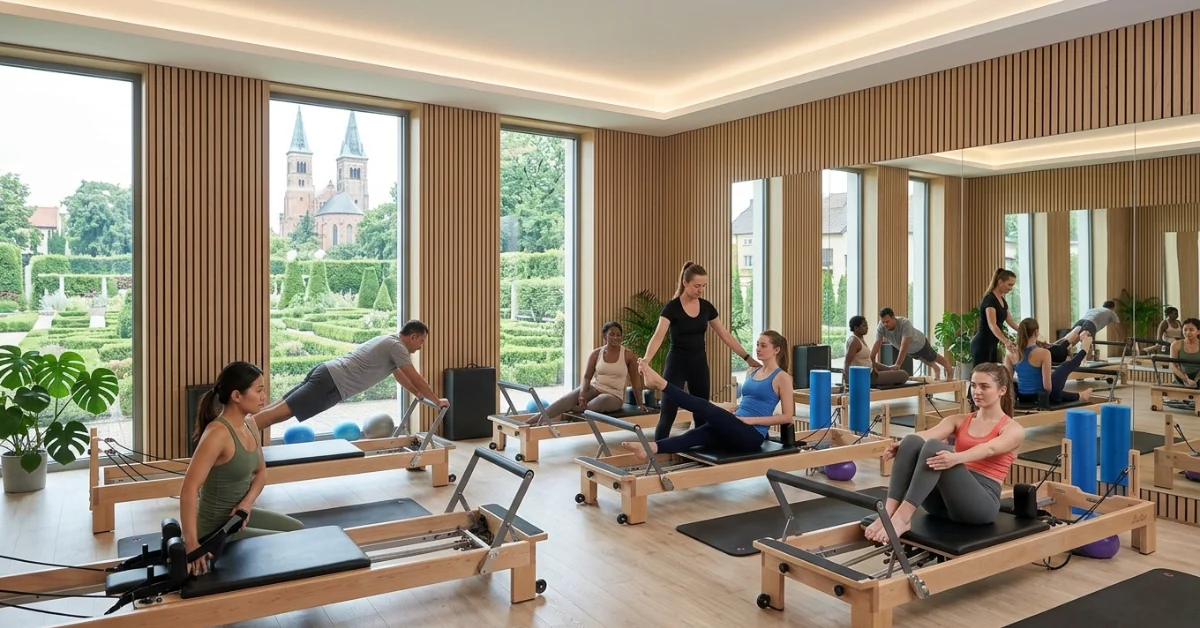
The whole business model depends on the format. Mat Pilates needs little equipment and works well in groups, so classes are cheaper for the client and easier to launch. Apparatus Pilates (reformers, cadillac, chairs) is a bigger investment, but it lets you offer private sessions and small groups at a higher price per hour.
Many studios start with the mat and add apparatus once they have a steady client base and are sure the investment will pay off. Decide on your target group too: beginners, seniors, pregnant and postnatal women, people finishing rehabilitation, or athletes. A different profile means different messaging, different pricing and a different timetable.
Registering a Pilates studio and getting insured
Most people start as a sole trader or set up a company. Each structure carries different tax obligations, so discuss your choice with an accountant. Whatever the structure, prepare:
- public liability insurance for your business,
- class terms and conditions and a health declaration for each participant,
- rules for handling personal data, including health data, which needs particular care.
Ask your insurer whether the policy covers apparatus classes and whether it sets requirements for instructor qualifications. If you teach pregnant women or people with injuries, state in your terms that classes are not a substitute for therapy. Check the exact requirements in the rules that apply in your country.
How much does it cost to start a Pilates studio
The cost of starting depends mainly on the format and the premises. Items in order of weight:
- rent and fit-out of the space (quiet, light, floor, ventilation),
- equipment: a small expense for mat work, by far the biggest item with reformers,
- instructor pay,
- insurance and bookkeeping,
- marketing and booking tools,
- a reserve for the first months, before classes fill up.
Example (hypothetical figures, not a price list, amounts in pounds for illustration): one mat class costs 40 in rent, 50 for the instructor and 10 in other costs, 100 in total. With 10 people that is 10 per person, with 4 people it is 25. On reformers the cap on numbers is lower because there are only a few stations, so the cost per person goes up and the price has to reflect it. That is why a studio with apparatus usually relies on small groups and private sessions, while a mat studio relies on larger groups.
Choosing a space for a Pilates studio: quiet, light and the right floor
Atmosphere is half the product, so look for premises with good acoustics and daylight. Check that the room has enough floor area and ceiling height, a changing area and a toilet, a floor suitable for mat work, ventilation with temperature control and easy access. With reformers, work out the floor area per station with room to walk between machines, and ask the landlord about the floor's load capacity. Noise from outside spoils classes where breath and concentration matter, so soundproofing is not a luxury.
To begin with, mats, balls, rollers, bands, blocks and blankets are usually enough. Buy apparatus gradually and from reputable manufacturers, because safety and durability come before price. Reformers need regular checks of springs, straps and fixings, so plan for them as an ongoing part of running the studio, not a one-off purchase.
Pilates instructors and certification
Pilates demands knowledge of anatomy and technique, so look for instructors with a recognised Pilates school certificate and experience of working with different groups. A good Pilates teacher spots body corrections, adapts exercises to the person and can run a group with mixed levels. For classes for pregnant and postnatal women and for people after injuries, check for extra qualifications in that area. We describe how to put a team together in our article on how to build a coaching team.
Set your standards: the maximum group size (usually around a dozen on the mat, a handful on reformers, depending on the room and equipment), how the first lesson runs and how you tell clients about contraindications.
Contraindications and safety in Pilates classes
This is what separates a professional studio from an accidental one. Before the first class, ask the client for a short interview: injuries, operations, pregnancy, back and blood pressure problems. Write down when she should consult a doctor and always state that classes do not replace treatment. The instructor should be able to offer modifications and stop an exercise when someone reports pain. Store health data in line with data protection rules and only for as long as you need it.
Special tip: make the health interview part of your offer, not a formality. A one-page form filled in at the first visit, followed by a short "how is your back?" at the start of every class, builds trust and lets the instructor notice changes before the client mentions them.
Timetable, levels and pricing for a Pilates studio
Build the timetable around the hours when clients have time: early morning, lunchtime and evening. Mornings work well for seniors and people who do not work full time. Split classes into levels (beginner, intermediate, advanced) and specialisms such as "healthy back" or Pilates for pregnancy.
Base your prices on your own calculation from the cost section. A few simple options work best: a single drop-in class, a class pass and a monthly membership. Price private sessions and small reformer groups clearly above group mat classes. You will find ideas for promotions and starter packs in our article on pricing and promotions for a sports academy.
Finding your first Pilates clients
Clients look for a studio near them, so start locally: a Google business profile with reviews and photos (with permission), a social media profile, and partnerships with physiotherapists, antenatal classes and local companies. Run an open day with trial classes; we cover the details in our guide to free trial classes and an open day for a sports academy. The whole promotion plan is tied together in our pillar article on local marketing for extracurricular activities.
An idea specific to Pilates is working with physiotherapists: they recommend the studio to patients who have finished rehabilitation, and you gain motivated clients. A "6 weeks for your back" challenge with a clear goal and an end date also works well.
How we solved booking and scheduling for a Pilates studio in MyClass
In a small studio every empty place is a loss, and the room limit is hard. In our system, classes are groups with recurring weekly slots, each with its own place limit, price, instructor and room. Separate rooms can stand for separate spaces, for example a mat room and a reformer room, and if a room clashes, the system warns you before you save the slot. A client books online for a specific date. When a class is full she goes on a waiting list, and when someone cancels, the first person in the queue gets the place automatically. The instructor marks attendance on a phone, and passes (a number of visits or validity in days) are used up when the client attends. One-to-one sessions run in a separate module, with instructor slots and a capacity of one.
What we don't do: clients do not pay online for classes or passes in our system, and you record payments by hand. There is no separate trial class type, no make-up classes and no moving a booking to another date; you can only cancel it. The health interview and declaration are handled outside the system, on your own form. See our pricing or create an account. We write about booking rules in our articles on online class booking for a school or club and class size limits.
Checklist before opening a Pilates studio
- Chosen format (mat, apparatus) and target group.
- Business structure, public liability insurance and terms with a health declaration.
- Premises with quiet, light, a changing area and ventilation.
- Class cost calculation and the number of clients needed to break even.
- Basic equipment and a plan for buying apparatus with regular checks.
- Certified instructors and group size limits.
- Health interview and rules on contraindications.
- Recruitment plan: Google business profile, partners (physiotherapists), open day.
You will find more on running a whole club in our article on how to set up a sports club, and on working with breath and movement in how to start a yoga studio.