How to start a ski school: slope, instructors, season
How to start a ski school or snowboard school: the agreement with the slope operator, instructor qualifications, insurance, equipment, a plan for the months without snow, pricing and your first students.
An instructor has taught for years in someone else's ski school. They know every regular client, they know which parent will ask about helmets, and more and more often they work out how much of each lesson fee is left after the employer takes its share. In spring the question comes up: isn't it time for a ski school of my own? The answer depends on a few things that look nothing like running a class in a hall: the agreement with the slope operator, the weather, a short season and a team of coaches you cannot replace in a week. Below are the steps in order, from the profile of your lessons to your first students, with answers to the questions new owners of ski and snowboard schools ask most often.
Note: this article is general information, not legal advice. Rules, insurance requirements and the school calendar differ between countries (for example the UK, Ireland, the US, Canada and Australia), so check the formalities with your national or local business registration authority, an accountant and an insurer.
Starting a ski and snowboard school: profile and location
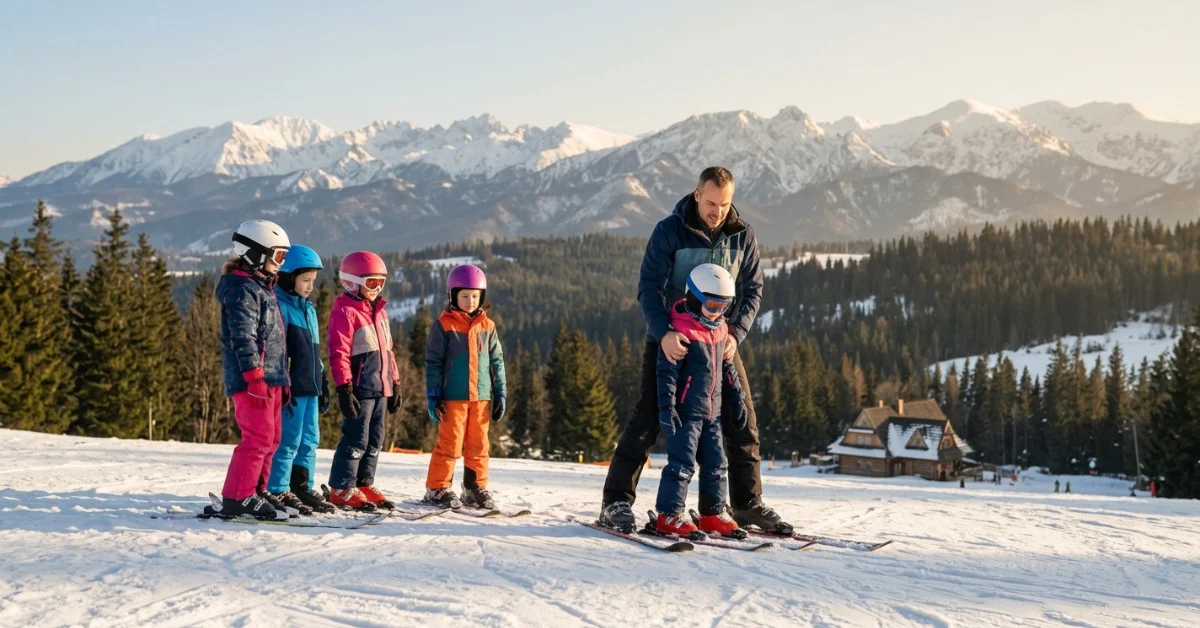
The first decision is what you teach: skiing, snowboarding or both, and who you teach, such as children, adult beginners, teenagers and people coming back to the slopes after years away. Children need shorter blocks, play and more adults on the slope. Adult beginners need a gentle start and support if they are afraid of speed.
The second decision is location. A ski school can run on a slope close to town (afternoon and weekend lessons), at a mountain resort (all-day lessons, school holidays, camps) or as a travelling school with its own transport. Each model has different costs and different customers. A school near town has regular students but a shorter season. A school in the mountains has a longer season and higher prices, but also more competition and higher accommodation costs.
Setting up a ski school: legal form and insurance
Most people start as a sole trader or sole proprietor, set up a company, or run the school as a club or non-profit association. Each form brings different tax obligations, so talk it through with an accountant. Whatever the form, prepare:
- liability insurance for your business that explicitly covers teaching winter sports,
- terms for your lessons and a participant statement accepting the risks, plus parental consent for anyone under 18,
- rules for handling participants' personal data.
Ask your insurer whether the policy covers lessons on the slope, what qualifications it requires from instructors, how many participants it allows per instructor and whether participants should have their own personal accident cover. Also check the rules in your country and with the slope operator on what conditions apply to businesses that teach on its ground.
Slope agreement for a ski school: passes and teaching zones
For a ski school the slope is what the ice is for a skating school: the biggest organisational and cost factor. Before you start, agree with the operator:
- whether an outside school may work on the slope and on what terms (fee, commission, exclusivity),
- which passes students and instructors need and whether schools get a reduced price,
- whether there are teaching zones, for example a gentle beginner slope or a "ski kindergarten",
- how access to lifts for children and beginners works,
- what happens when the slope closes because of weather or a technical fault.
It is best to negotiate one agreement for the whole season rather than separate arrangements each time.
Ski school costs: how to price one hour of lessons
Costs depend on the model and the place. The main items, in order of weight:
- instructor pay (usually the biggest item),
- slope fees, passes and any commission,
- insurance and accounting,
- teaching equipment and a rental fleet, if you run your own,
- transport in the travelling model,
- marketing, booking tools and a reserve for days without snow.
Example (hypothetical figures, in £, not a price list and only for illustration): one group hour costs the school £45 for the instructor and £15 for passes and fees, £60 in total. With 6 participants that is £10 per person, and with 3 participants it is already £20. Then add the weather: a windy day that closes the lifts is a day without income and with the same costs. Base your financial plan on a realistic number of teaching days in the season, not on the whole winter calendar.
Ski and snowboard instructors: qualifications and safety
The team is the backbone of a ski school. Look for coaches with instructor qualifications in the right discipline, experience with children and first aid knowledge. The requirements for qualifications are set by the rules in your country, your insurer and the slope operator, so check with each of them. A good instructor also teaches slope etiquette and notices fatigue and chilling. How to find and keep such people is covered in our article on how to build a coaching team.
Write down procedures: how many participants per instructor, how the group moves around the slope, equipment checks before the lesson (bindings, helmets), what to do after a fall or a head injury, the contact for slope rescue, and the first aid kit. Require helmets from children and teenagers and encourage them for adults. Decide which weather conditions mean cancelling or shortening a lesson (strong wind, fog, very low temperatures).
Special tip: write a one-page "slope day card": meeting time and place, who collects the children from their parents, where the first aid point is, the number for slope rescue and your own number, and the rule "if a child is getting cold, we go back to base". An instructor who has this in a jacket pocket does not make panicked decisions that should have been made in advance.
Ski school equipment: your own rental or a partnership
Most beginners do not own equipment. You have two options: partner with a rental shop near the slope, or build your own pool of skis, boards and boots. Your own rental is an investment. It needs servicing, size fitting and records, but it gives you control over quality and an extra income stream. A partnership is cheaper at the start; in that case agree prices for participants and a guarantee that equipment will be available during lesson hours.
A boot that pinches or a board that is too long for a child ruins the whole day, so plan time for fitting before the lesson and ask parents to bring a helmet, gloves, goggles and warm layers.
Ski school seasonality: what to do in the months without snow
Seasonality is the biggest financial challenge. Plan income outside winter: dry-land training in a hall (general fitness, balance, coordination), summer camps, lessons on year-round slopes or in indoor ski halls if they are within reach, and work with schools and clubs. Keep in touch with parents and students outside the season through a newsletter and social media, because they are the ones who return for next winter. Holiday trips can fill your busiest period. How to plan campaigns for such moments is covered in our article on seasonal campaigns for a sports academy.
Ski school pricing and weather cancellation rules
Base your price list on the hourly calculation. Courses in packages work well (for example several sessions for children or a weekend course for adults), supplemented by private lessons at a higher hourly price. A package with the lift pass included is convenient for parents and predictable for the school. Write the weather cancellation rules (refund, move to another date, voucher) into your terms, because this is the most common source of disputes. For ideas on packages and promotions see pricing and promotions for a sports academy.
Finding the first students for your ski school
Parents and adults look for a school near the slope or near town, so start locally: a Google business profile with reviews, work with schools and nurseries, photos from lessons with parental consent, and a free trial lesson. We describe the details in the guide to free trial classes and an open day for a sports academy, and local activity in the article on local marketing for extracurricular activities.
Special tip: a "first day on the slope" package for the whole family: a lesson for the children, a separate lesson for the parents and a ride together at the end. Parents who feel for themselves what it is like to stand on skis for the first time understand better why their child needs time, and they are more willing to come back for the next season.
How we solved enrolment and scheduling in a ski school in MyClass
Winter logistics are demanding: groups depend on age and level, dates depend on the weather, and parents want to hear about a change straight away. In MyClass we do it like this:
- Groups and dates: a group has a recurring weekly slot (for example Saturday morning), with a place limit, a price and a location. You can enter the slope as the location and the meeting point as the room. Days when the slope is closed you mark off in the calendar of dates.
- Enrolment: a parent creates an account and enrols their child for a specific date. By default you approve requests manually, and you can switch on automatic approval. When a group is full, further people go onto a waiting list and move up on their own when a place frees up.
- Weather cancellation: you cancel a single date and give "weather conditions" as the reason. Enrolled people get a notice in the app, and by email if you have email sending switched on, and the entries from their passes are returned.
- Attendance: the coach marks attendance on a phone, also on the slope. For courses of several sessions you use passes with a limit of entries and a validity period.
- Levels: there is no "level" field in the program, so we describe it in the group name or description, for example "beginners, never been on skis".
What we don't do: there are no online payments from customers (you record a payment by hand), no separate type of trial class, no make-up classes and no moving a date to another day. Cancelling and adding a new date solves the problem, but parents enrol themselves again. There is also no calendar of days off and no SMS notifications. See the pricing or create an account. We write more about enrolment rules in the articles on online class booking for a school or club and on class size limits.
Checklist before opening your ski school
- A chosen profile (skiing, snowboarding, children, adults) and a location model.
- A legal form, liability insurance and terms with a participant statement.
- A slope agreement for the whole season, with passes and a teaching zone.
- A cost calculation per hour and a realistic number of days in the season.
- Qualified instructors and written safety procedures.
- Equipment: your own rental or a partnership, fitting rules and helmets.
- A plan for the months without snow.
- A price list, weather cancellation rules and a plan for finding students.
A school for a different winter discipline faces similar challenges; see how to start an ice skating school and the general article on how to set up a sports club.