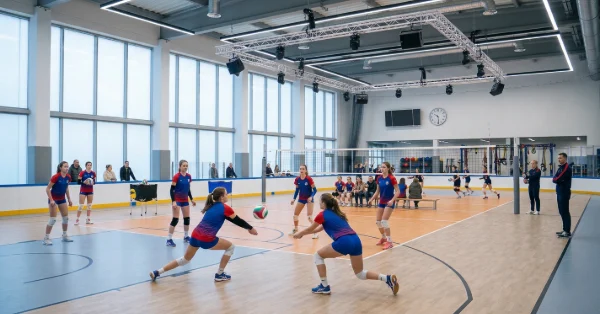
How to Start a Martial Arts School: Mats, Coaches, Belts
How to start a martial arts school (judo, karate, BJJ, boxing): choosing a style, the venue and mats, instructors, a belt and grading system, safety, pricing and a worked cost example with illustrative figures.
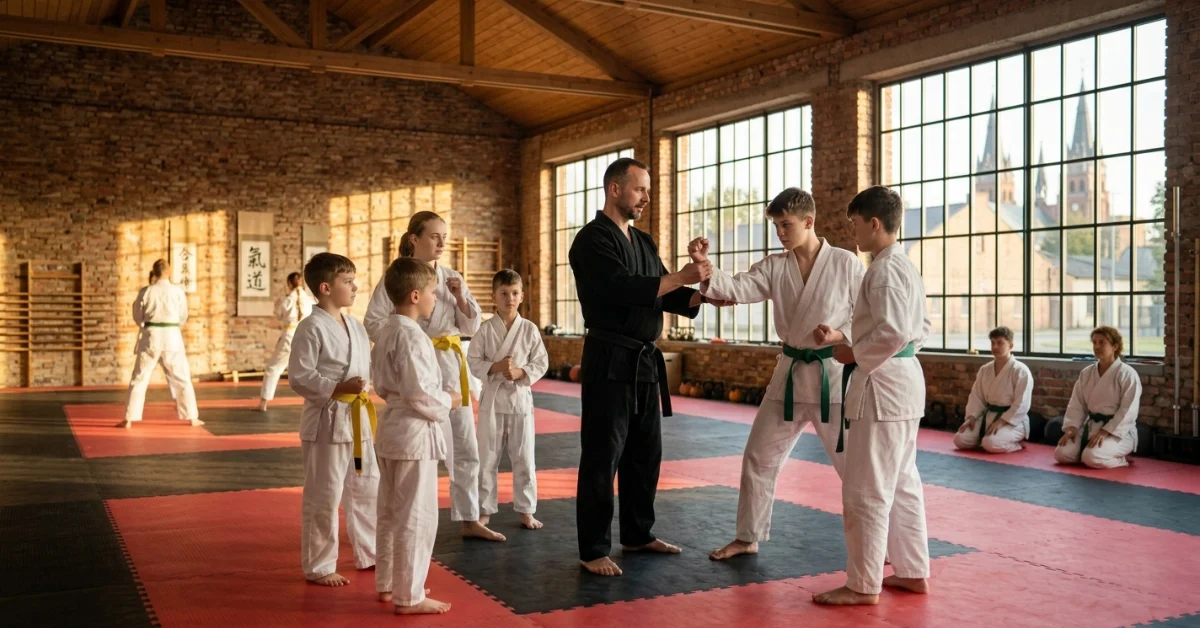
For eight years you have been teaching in somebody else's club: kids from the local primary school on Mondays, adults on Thursdays. Parents keep asking whether you would open a group of your own, and you start counting what mats cost, who would insure sparring, and who pays for the hall when six people turn up on a Monday instead of fifteen. That is how most dojos, fight clubs and martial arts schools begin, usually with a coach who has outgrown a borrowed room. Below are the decisions in order: from choosing a style, through the venue and your team of instructors, to pricing and your first students.
Note: this article is general guidance, not legal advice. Rules, school calendars and platform policies differ between countries (for example the UK, Ireland, the US, Canada and Australia), so check the formalities and insurance with your local business registration office or tax authority, an accountant and an insurer.
Martial arts school: choosing a style and a profile
The first decision is the discipline. Judo, karate, Brazilian jiu-jitsu (BJJ), boxing, kickboxing, taekwondo and MMA differ in what they need from the room, the equipment, the staff and the level of contact. Grappling arts (judo, BJJ) need mats across the whole floor, while striking arts (boxing, kickboxing) need bags, pads and room to spar. Pick the style you know best and the one your area actually has demand for.
Decide on a profile too: recreational and fitness classes, kids' groups that build coordination and discipline, a competition squad, or self-defence. Many schools start with children and adult beginners, because that is the biggest audience, and add an advanced or competition group later.
Legal setup and insurance for a martial arts school
Most people choose between operating as a sole trader, forming a company or running a non-profit sports club. A club structure can make it easier to join a national federation and enter competitions, but every form brings different tax and reporting duties, so talk it through with an accountant before you decide. Whichever route you take, get these in place:
- public liability insurance that explicitly covers contact classes,
- terms and conditions plus a participant health and risk waiver, and parental consent for under-18s,
- a clear policy on how you handle participants' personal data.
Ask your insurer directly whether the policy covers sparring, and what it requires in terms of instructor qualifications and the number of students per instructor. Also check whether your discipline has a national federation or governing body worth joining: licences, grading exams and competition entry usually run through it. We covered that structure in more detail in the article on how to set up a sports club.
How much it costs to start a martial arts school
Start-up costs depend on the style and the venue. In order of weight, the main items are:
- rent and fitting out the room (flooring, mats, ventilation, changing rooms),
- equipment: mats, bags, pads, protective gear, sparring kit,
- instructors' pay,
- insurance and bookkeeping,
- federation membership fees, licences and grading costs,
- marketing, a booking tool and a cash reserve for the first months.
Example (hypothetical figures, not a price list, amounts in £ are for illustration only): the hall costs £2,400 a month including utilities, instructors cost £1,800, and insurance, federation fees and small equipment add £600. Monthly costs come to £4,800. With 50 members paying £96 each, income is £4,800, which is your break-even point. In a martial arts school the numbers usually improve as you add classes, because the same room hosts several sessions a day, so a good timetable has a big effect on profitability.
Mats and venue for a martial arts school
The room needs enough floor area and ceiling height, ventilation, changing rooms and access to toilets. For grappling arts the mats are the key item: thick enough and continuous, with no gaps where a foot can catch. For striking arts you need a non-slip floor and a place for bags with a solid fixing. Check that the landlord accepts contact classes and the fixing of equipment to the structure.
Mats and equipment need regular disinfecting and inspection, because close contact spreads skin infections. Write down your hygiene rules: clean kit, no shoes on the mat, short nails, hand washing.
Martial arts instructors and training safety
A school is only as good as its team. Look for coaches who hold instructor qualifications in their discipline (the requirements are usually set by the governing body, so check them), who have experience running groups and who can work with children if you plan kids' classes. A good instructor teaches technique and respect, keeps contact within the level of the group and can settle a room. We describe how to build a team in the article on how to build a coaching team.
Put your safety procedures in writing: students per instructor, sparring rules (protective gear, pairing, intensity), what to do after a head injury, a first aid kit and trained first aiders. The rules for working with children and for contact with parents should be clear and easy to find. Check the specific child safeguarding requirements in the rules that apply in your country.
Special tip: after every injury, write a short note: date, group, what happened, what the instructor did. Those notes help in a conversation with a parent or an insurer, and after a few months they show which drills or pairings need changing.
Belt system, grades and gradings in a martial arts school
Grades are one of the strongest motivators. Belts in judo and karate, kyu and dan grades, and the stripes and belts in BJJ give students a goal and visible progress. Set out your syllabus: what you teach at each level, how often gradings take place and what the requirements are. Check your federation's rules if you want your grades to be recognised outside your own school.
Gradings can bring in income, but fees should be transparent and tied to real costs (examiner, certificate, federation fees). A school where belts are seen as something you buy loses its reputation fast.
Kids and adults in martial arts classes
Children's classes have a different rhythm from adult ones: shorter blocks, more play, and a focus on coordination, discipline and respect. Split groups by age and experience. Adult beginners often need a gentler start, because they worry about injury and contact. Make the first sessions friendly and bring sparring in gradually, only once the student has the basics. Younger students also raise the topic covered in the article on how to start a kids' self-defence school.
Martial arts school pricing
Base your pricing on the calculation above. What usually works is a monthly fee for a fixed number of classes or unlimited classes, topped up with drop-in sessions, a sibling discount and a starter pack (for example a uniform or gloves included). Cost out grading fees, competitions and camps separately. Set clear rules on payment, freezing a membership and cancellation. You will find more on building offers and promotions in the article on pricing and promotions for a sports academy.
Getting your first students for a martial arts school
Start with free trial classes and an open day with a demonstration; we describe them in the guide to free trial classes and an open day for a sports academy. Set up a Google Business Profile with reviews, work with schools and community clubs, and show the first successes of your competitors and the belts your kids earn (with parents' consent). More ideas for local promotion are collected in the article on local marketing for extracurricular activities.
Two ideas specific to this field: an "open training" session where kids show parents what they can do, and a "30 day challenge" for adult beginners. Self-defence classes also work well as a light introduction to the full programme.
How we solved bookings and the timetable for a martial arts school in MyClass
A school with several groups and grades soon outgrows a spreadsheet, so we built MyClass to keep the timetable and bookings in one place. Each group (for example kids aged 7 to 9, adult beginners, BJJ no-gi) has weekly recurring sessions, its own limit on places and, optionally, a price, a coach and a room. If your dojo has two mats or several branches, you set up rooms and locations, and the system warns you about a room clash. Customers book online for a specific session; by default an admin approves each booking, but you can switch on automatic approval. When a session is full, the next person goes on a waiting list and moves up when someone cancels.
The instructor has an attendance list on their phone: one tap marks a student present, late, absent or excused, and the school sees group attendance and the people at risk of leaving. You enter passes with a set number of visits or a validity period for participants, and a visit is used up on attendance or on booking, depending on your setting. When a pass is running out, the participant gets an email reminder (if the school has email sending switched on).
What we don't do: there are no online payments for classes or passes, so you record payments by hand. There is no separate trial-class type, and make-up classes and moving a session to another date are not features (you cancel the session and set your make-up rules in your terms). We don't track belts and grades in the system, so you keep the grading syllabus and the list of candidates separately, and describe a group's level in its name or description. Check the pricing or create an account right away. For a practical look at bookings and attendance, see online class booking for a school or club and online attendance register.
Checklist before opening a martial arts school
- A chosen style and profile: recreation, kids, competition, self-defence.
- A legal structure, liability insurance, and terms with a participant waiver.
- A room with the right floor, mats and the landlord's consent to contact classes.
- A cost calculation and a break-even point in number of members.
- Qualified instructors and written safety procedures.
- A belt system and transparent grading rules.
- A price list with clear payment and freezing rules.
- A plan for recruiting students: trial classes, an open day, a Google Business Profile.