How to Start a Swimming School?
Dreaming of opening your own dance school, martial arts club, or language center, but feeling overwhelmed by paperwork, budgets, and scheduling? Passion gets you started, but a solid plan keeps you growing. In this guide, we break down everything you need for a smooth launch: from calculating startup costs and setting up your first class schedule to winning your first 50 students—all without getting buried in spreadsheets.
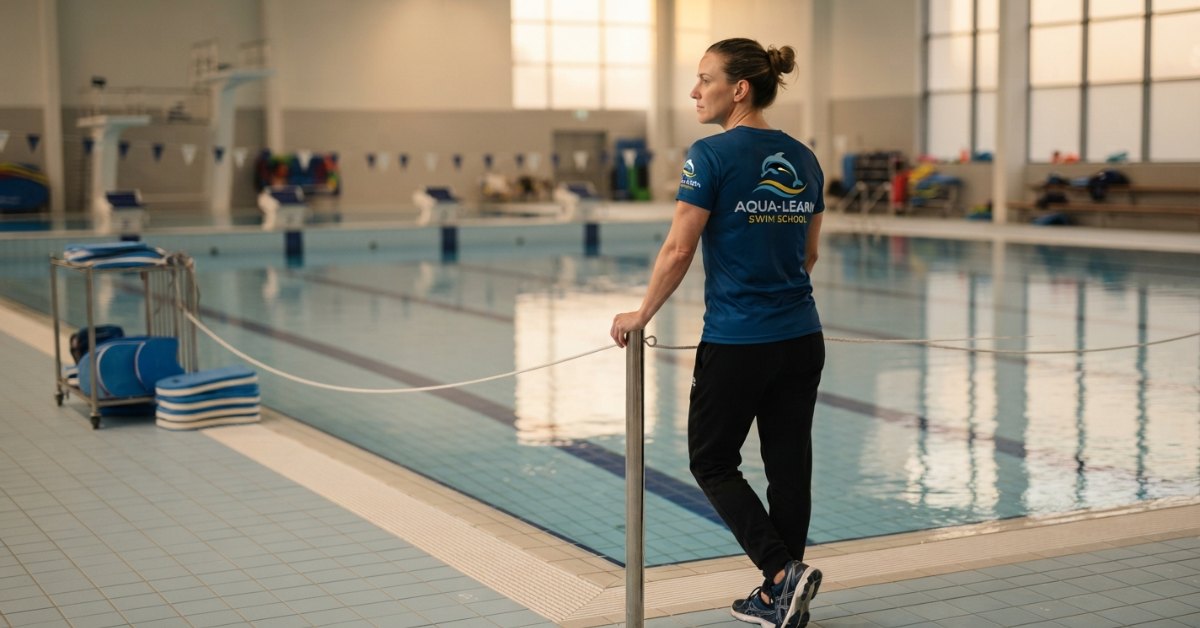
How to start a swimming school? This is a question that may arise both for experienced instructors and for people who see potential in the growing market for sports classes for children and adults. Swimming lessons are a service that addresses a specific need – parents want their children to feel safe in the water, while adults want to learn how to swim, improve their technique, or simply spend their free time actively.
At the same time, running a swimming school involves much more than simply organizing lessons at a swimming pool. Behind every class are lane bookings, instructors, schedules, payments, customer communication, marketing, and day-to-day administration.
That is why it is worth carefully planning the entire business model before starting operations. The better the school is prepared from the beginning, the easier it will be to grow it later.
Is a Swimming School a Good Business Idea?
A swimming school can be an interesting service business, especially in towns where there is a swimming pool but the range of classes is limited or does not meet all the needs of local residents.
One major advantage of this type of business is the ability to build long-term relationships with customers. Learning to swim usually does not end after a single lesson. A child may start as a beginner and then progress to higher levels. The same applies to adults who, after mastering the basics, may choose to improve their technique or take part in regular training sessions.
This means that a school can generate revenue not only by acquiring new customers but also by retaining existing ones.
Parents of children are a particularly interesting customer group. From their perspective, not only the quality of the swimming lessons matters, but also convenience. Location, class times, easy communication with the school, the ability to register quickly, and transparent payment terms can all have a significant impact on the purchasing decision.
Before starting the business, it is worth researching the local market. Check which swimming schools already operate in the area, what prices they charge, which groups they offer, and what times their classes take place.
You do not have to compete solely on price. Your advantage could be better organization, smaller groups, specialization in working with children, classes for adults, greater availability of time slots, or simply a more convenient way to register for classes.
How Does a Swimming School Operate?
The business model of a swimming school is relatively simple. The company organizes classes at a rented swimming pool, provides instructors, creates participant groups, and sells places in those classes.
In practice, the biggest challenge is not conducting the lesson itself, but organizing the entire process around it.
Each group needs an appropriate time slot, an instructor, and a place in the pool. Participants need to be registered, informed about the schedule, and billed. On top of that, there are absences, schedule changes, cancellations, and communication with parents.
That is why a swimming school should be treated as a fully-fledged service business from the very beginning, rather than simply an instructor's business.
Consistency and repeat business are particularly important. If a customer is satisfied with the classes, they should be able to easily continue learning during the next period. Regular classes and returning customers can form the foundation of a stable business.
How to Start a Swimming School Step by Step
If you are wondering how to start a swimming school, it is best to begin with market research and only then move on to organizing the classes.
The first step should be defining who your offer is intended for. Will the school focus primarily on children? Will it also offer classes for adults? Do you want to organize private lessons?
Next, you need to find a suitable swimming pool and agree on the terms for renting lanes. The next stage is preparing your offer and finding instructors.
Only once you have the foundations of the business in place should you prepare a website, registration system, and marketing activities.
It is a good idea to plan the entire process before starting sales. This makes it possible to serve the first customers according to clearly defined rules instead of creating procedures on the fly.
Choosing a Business Model
A swimming school can operate using several different models.
Group classes are the most popular. They allow you to use a rented lane efficiently and serve a larger number of participants at the same time. However, it is important to choose the right group size. Too many participants can negatively affect the quality of the classes.
Another option is private lessons. They can be more expensive, while at the same time meeting the needs of customers who expect an individual approach.
Many schools combine both models. Group classes form the foundation of the business, while private lessons are offered as an additional service.
At a later stage, the school can expand its operations to additional locations, holiday courses, classes for adults, or training sessions for more advanced swimmers.
However, it is worth building the business from the beginning in such a way that growth does not result in a proportional increase in administrative work.
Location and Choosing a Swimming Pool
Choosing the right swimming pool can be extremely important to the success of the entire business.
The availability of lanes is obviously crucial, but location should not be overlooked. Parents often choose classes that are close to home, school, or their workplace.
Parking, public transportation, the standard of the facility, and the availability of changing rooms also matter.
Particular attention should be paid to the times when lanes can be rented. Even a very good swimming pool may turn out to be the wrong location if the only available time slots are those when potential customers cannot attend classes.
Afternoons and early evenings may be the most attractive options, especially for children's classes.
Before signing an agreement, it is therefore worth checking not only the rental price but, above all, whether the available hours will allow you to create an attractive schedule.
Renting Swimming Pool Lanes
For most new swimming schools, lane rental will be one of the basic operating costs.
Before starting cooperation with a swimming pool, you should carefully analyze the terms. Important factors include not only the rates, but also the minimum rental period, the possibility of changing time slots, and the rules that apply when classes are cancelled.
You should then calculate the profitability of an individual group.
If a certain number of people train in one lane, you need to determine what the class price must be so that, after deducting the cost of the pool, instructor, and other expenses, the business remains profitable.
It is also worth leaving yourself some margin. Operating costs can change over time, and a group will not always be filled to 100% capacity.
Instructors Are the Key to a Swimming School
The instructor is the face of the swimming school.
A parent may find your website through advertising or a search engine, but whether they remain a customer for longer is often determined by their experience with the classes.
That is why, when choosing instructors, you should pay attention not only to their qualifications but also to their ability to work with a particular group.
Working with children requires a completely different approach than training an adult athlete. An instructor must be able to communicate knowledge in an understandable way, build trust, and motivate participants.
It is also worth maintaining consistent standards across the entire school. Customers should receive a similar level of quality regardless of which instructor they work with.
A well-prepared team can become one of the school's greatest competitive advantages.
Swimming School Offer
The offer should be simple and easy to understand.
The foundation can be children's classes divided according to skill level. It is worth creating groups for beginners, intermediate swimmers, and more advanced participants.
The second segment can be classes for adults. In this case, customer needs can vary significantly – some want to learn how to swim from scratch, while others want to improve their technique or increase their endurance.
Private lessons can also be offered as an additional service.
During the holiday season, intensive swimming courses can also be a good addition to the offer.
However, it is not worth creating an overly broad offer from the beginning. It is better to start with a few well-prepared products and expand them depending on customer demand.
Dividing Participants into Groups
Properly dividing participants into groups is very important for the quality of learning.
The simplest solution may seem to be dividing participants by age, but this is not always sufficient.
Children of the same age can have completely different levels of experience in the water. One child may already be able to swim confidently, while another may only be starting to learn.
That is why it is worth taking both age and skill level into account.
During registration, you can collect basic information about a participant's experience. This makes it easier to assign them to the right group.
A well-matched group benefits everyone. The instructor can conduct classes at the appropriate level, while participants learn alongside others with similar skills.
Pricing for Swimming School Classes
The price of classes should be based on the actual costs of running the school and the value provided to the customer.
It is not worth setting prices solely based on competitors' prices.
When calculating the price, you should primarily consider swimming pool rental and instructor compensation. You also need to account for marketing, accounting, software, payment processing, and general business operating costs.
You can then determine what price per participant will provide an appropriate level of profitability.
The way customers are charged is also important. A school can sell individual lessons, packages, monthly subscriptions, or entire semesters.
For regular swimming lessons, a recurring class model can be particularly convenient. It makes scheduling easier and helps build a long-term relationship with the customer.
The pricing structure should be as transparent as possible. Customers should immediately know how much they will pay and what is included in the price.
Costs of Starting a Swimming School
The cost of starting a swimming school can vary significantly depending on the scale of the business.
The biggest advantage of a rental-based model is that you do not need to invest in building your own facility. You can start operating at an existing swimming pool and gradually increase the number of classes.
The most important expenses primarily include lane rental and instructor compensation. You should also account for website development, marketing, and the tools needed to manage customers.
It is worth creating a financial plan before starting the business.
Calculate how much it costs to run one hour of classes, how many participants need to be in a group, and what price is required to achieve the desired profitability.
This makes it easier to avoid a situation where the school has many customers but the business does not generate the expected financial results.
Formalities and Safety
Running a swimming school also requires appropriate legal and organizational preparation.
Before starting operations, you should check the current requirements regarding conducting classes, instructor qualifications, and safety rules applicable at the specific facility.
It is also worth preparing clear school regulations. They should define the rules for participation, payments, cancellations, and handling absences.
Children's safety is particularly important. Procedures should be clear to both instructors and parents.
Depending on the business model, additional issues may also arise regarding personal data protection, insurance, and participant documentation.
Before starting operations, it is worth verifying the current regulations and, if necessary, seeking professional advice.
Swimming Lesson Registration System
At the beginning, a school can handle registrations by phone or through messages. However, as the number of customers grows, this solution quickly becomes inefficient.
If a school runs several groups, manually checking available places, sending payment information, and keeping track of the schedule starts taking up more and more time.
That is why it is worth implementing a class registration system that organizes the entire process.
For customers, the most important thing is being able to easily find the right group and register for classes without having to contact the school multiple times.
For the owner, it is important to have information about participants, groups, schedules, and payments organized in one place.
A good registration system can therefore reduce administrative work and allow the owner to focus on running and growing the school.
This becomes particularly important when the school starts operating in several locations or serves a larger number of participants.
At this point, it is worth considering a solution such as Classme, which can serve as the organizational backbone for a school offering regular group classes.
However, a registration system should not be treated merely as an addition to the website. It is part of the entire customer experience.
The user should follow a simple journey:
find the school → explore the offer → choose a class → register → receive information about the class.
The simpler this process is, the less work is required from the school and the more convenient the customer experience becomes.
Summary
How to start a swimming school? The key is to combine a good business idea with appropriate organizational preparation.
Knowledge about swimming alone is not enough. You need a suitable swimming pool, good instructors, a well-thought-out offer, and a financial model that allows the company to grow over the long term.
Location is also very important. A school operating in a place that is easily accessible to parents may have an advantage over an offer located far away from potential customers.
Marketing should not be overlooked either. A website, local SEO, Google Business Profile, customer reviews, and a presence on social media can help reach people looking for swimming lessons in a specific location.
As the business grows, the importance of proper organization also increases.
At the beginning, a phone, calendar, and simple spreadsheet may be enough. However, once the school starts serving dozens or hundreds of participants, it is worth using a registration system that organizes registrations and day-to-day administration.
It is best to think about this from the very beginning.
A well-prepared swimming school should be convenient not only for participants but also for the person managing it.
Ultimately, the success of such a business is built on several simple foundations: a good location, quality instruction, the right offer, appropriate pricing, effective marketing, and efficient organization.
If these elements are well planned, a swimming school can gradually grow its customer base, increase the number of groups, and introduce additional locations and services.