How to Start a Personal Training Studio: Model and Pricing
Your own premises, a gym or mobile training, trainer qualifications, the initial consultation, session packages and cancellation rules. How to start a personal training studio, with a cost calculation and FAQ.
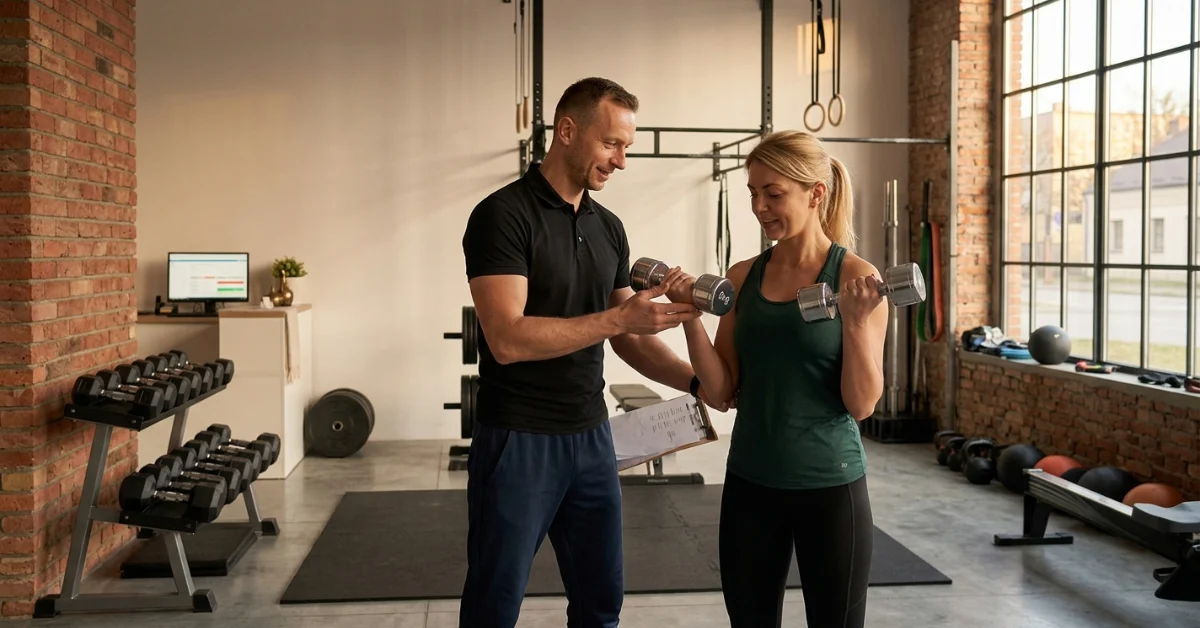
A personal trainer has twenty-odd sessions in the diary every week, some in clients' homes, some in a gym where the hours are rented, and between them the travel that nobody will ever invoice. One cancelled session on a Friday is an hour of income gone for good. That is the moment the question appears: how to start a personal training studio, a place of your own where a coach's time can be arranged more sensibly. Personal training is a form of fitness in which the client pays for the trainer's full attention, and income is capped by the number of hours in the week. Below are the decisions that bring order to it.
Note: this article is general guidance for several countries (for example the UK, Ireland, the US, Canada and Australia) and is not legal advice. Rules differ from country to country and change over time, so check business registration with your local registry or tax authority, and discuss insurance and accounting with an accountant and an insurer.
Personal training studio: your own premises, a gym or mobile training?
The first decision is the business model. A studio of your own gives you control over the atmosphere and the equipment, but it means rent and fixed costs. Renting hours in an existing gym lowers the cost of starting, but makes you dependent on the venue and its rules. Mobile training (at the client's home, in a park) has the lowest costs, but it eats time in travel that earns nothing. Online coaching scales best, but it needs different skills and tools.
Many people start with rented hours or mobile training and open a studio once a steady group of clients covers the costs. Decide on a specialism too: weight loss, building strength, returning to fitness after an injury, training for older adults, competition preparation. A narrow specialism makes your message easier and justifies a higher price.
Personal training studio paperwork and insurance
Most trainers go for self-employment as a sole trader, or form a company. Each form has different tax duties, so talk the choice over with an accountant. Whatever the form, prepare:
- public liability insurance that covers personal training,
- terms of service and a client's health declaration,
- rules for handling personal data, including health data, which needs special care.
If you train in someone else's gym, agree in writing with the venue manager who is responsible for equipment and safety, and whether the venue requires you to hold your own policy. Ask your insurer whether the policy sets requirements for the trainer's qualifications. Check the details in the rules that apply in your country.
How much does it cost to start a personal training studio
The cost of starting depends on the model. Items in order of weight:
- premises: studio rent or the fees for gym hours,
- equipment: weights, mats, bands, measuring gear,
- insurance and accounting,
- trainer certifications and courses,
- marketing and booking tools,
- a reserve for cancelled sessions and the first months.
An example (hypothetical figures in £, not a price list): a trainer works 25 hours a week with clients, the price of a session is £50, and the monthly fixed costs (rent, insurance, equipment, marketing) come to £1,400. With 100 sessions a month, income is £5,000, so after costs £3,600 is left before tax. With 60 sessions, income falls to £3,000, and after costs £1,600 remains. That is why attendance and retention are the key in this business: a cancelled session does not come back, and the trainer's time is the only product.
Personal trainer certification and qualifications
Clients entrust their bodies to the coach, so qualifications matter a great deal. Look for courses and certificates recognised in the industry, and keep adding knowledge of anatomy, programming, first aid and working with people who have contraindications. Check what your insurer and the venue where you work require. A good trainer does not only write the exercises, but also listens, motivates and knows when to send a client to a doctor or physiotherapist.
Plan for continuing development: specialist courses, conferences, working with physiotherapists and dietitians. Clients notice, and you gain a reason for a higher price. When the studio grows to several trainers, the text on how to build a coaching team will come in handy.
The initial consultation and personal training studio equipment
The initial consultation is what separates a professional trainer from a casual one. The first meeting covers an interview: the client's goal, training history, injuries and operations, lifestyle, available time. Add basic measurements (for example body weight, circumferences, a fitness test) that will let you show progress later. Write down the conclusions and propose a plan: frequency, duration and stages. Say when the client should see a doctor, and that training does not replace treatment. Keep health records in line with data protection rules and only as long as needed.
To start, dumbbells and kettlebells in a few weights are usually enough, plus mats, resistance bands, balls, a pull-up bar or suspension trainer anchors, a bench and simple mobility kit. Buy the rest gradually, according to what clients need. A small, well-chosen set is better than expensive equipment nobody uses. Keep it clean and serviced regularly.
Personal training pricing: packages and cancellation rules
Prices depend on the city, your experience and your specialism, so base them on your own calculation and not on what competitors charge. Packages work well (for example 8 or 12 sessions valid for a set period) with a lower unit price than a single session, because they tie the client in for longer and make income more predictable. Add the option of a first trial session or an initial consultation. There is more on building offers in the text on pricing and promotions for a sports academy.
The cancellation rules are crucial. Set it so that a session can be cancelled free of charge no later than, say, 24 hours before, and a later cancellation or a no-show is forfeited. Put it in the terms and apply it consistently. Clients accept clear rules if they are presented honestly.
Special tip: instead of "12 sessions to use", sell "12 weeks to the goal", with the sessions planned in advance on fixed days and times. A fixed slot in the client's diary cuts cancellations, because training stops being something you "fit in when there's time".
Small groups: how to break the hours limit in a personal training studio
The biggest limit is that the trainer works with one client at a time. A common solution is small groups: 2 to 4 people per session, such as couples, friends or people with similar goals. The price per person is lower than for one-to-one training, but income per trainer hour rises, and clients gain motivation from training together. Keep the quality of an individual approach and limit numbers so that the coach can correct everyone's technique.
Your first personal training clients
Look for clients where they are: near the studio, in local companies, among people who recommend you. Set up a Google Business Profile with reviews, show client stories (with their consent), and work with physiotherapists, dietitians and doctors. Run a free consultation or an open day; the details are in the guide to free trial classes and an open day for a sports academy. The other channels are covered in the pillar article on local marketing for extracurricular activities.
An idea specific to this field is a programme for a set goal and time, for example "12 weeks to your first 10 km" or "getting back in shape after having a baby", with a measurable result at the end. A programme like that is easier to sell than a general "personal training", and the client can see what they are paying for.
How we solved the session calendar and packages for personal training in MyClass
With a dozen or so clients, bookings in a messaging app are still enough. With several dozen, the question comes up of who has a valid package, how many sessions they have left and who cancelled in time. In our system one-to-one sessions run in a separate module: the coach sets up recurring availability (day, hours, price, end date), from which slots with a capacity of one are created, and the client books a free slot online. Small groups are ordinary groups with a weekly slot and a limit of 2 to 4 people, with a waiting list and automatic promotion after a cancellation. A client can cancel a booking themselves up to the number of hours before the start that the club has set, and the coach sees their own timetable and marks attendance on a phone. A studio in several places can have separate locations and rooms.
What we don't do: there are no online payments for sessions or packages, and you note a payment by hand. Passes with a number of entries work in groups but not for one-to-one sessions, so you count a package of individual sessions outside the system. We don't charge late-cancellation fees, and there are no make-up classes, no separate trial session type and no moving a booking to another date. Check the pricing or create an account. We describe the booking rules in the text on online class booking for a school or club and the online attendance register.
Checklist before your first personal training session
- A chosen model (studio, rented hours, mobile, online) and a specialism.
- A business form, public liability insurance and terms with a health declaration.
- A cost calculation and the number of sessions needed to cover it.
- Certificates and a development plan for the trainer.
- An initial consultation with an interview, measurements and a plan.
- Basic equipment and cleaning rules.
- Session packages and clear cancellation rules.
- A plan for finding clients: Google Business Profile, partners, a programme for a specific goal.
You can read more about running a whole club in the text on how to set up a sports club, and about high-intensity group classes in the article how to start a CrossFit gym.