How to Open a Dance School: Setup, Studio, Pricing
A dance teacher who has spent years working in other people's studios decides to open their own school. Legal setup, studio, staff, timetable, pricing and first students in one plan.
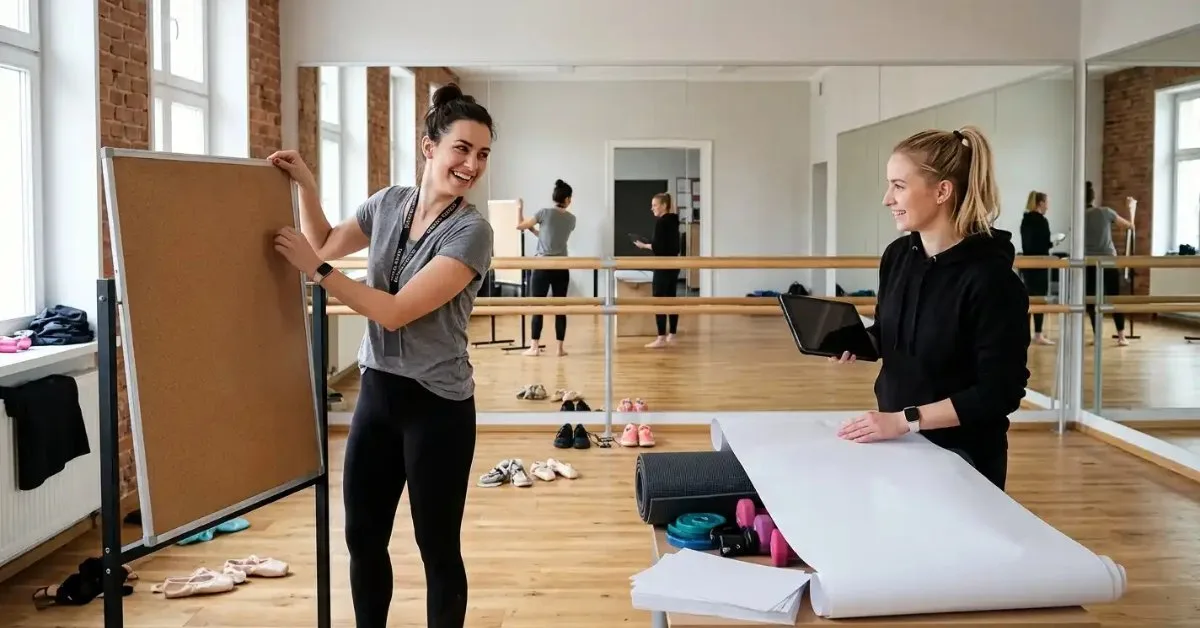
For years you have taught evening classes in someone else's studio. You have regulars, a few couples who came for a course before their wedding and stayed for two seasons, and more and more often you hear: "Have you ever thought about teaching at your own place?" But between the first salsa step and a studio of your own sits a list of decisions: business structure, studio, staff, timetable and pricing. Below is the order in which it makes sense to take them if you are wondering how to open a dance school, not just how to hire a hall for a few hours.
Note: this article is general guidance, not legal advice. Rules, school calendars and platform policies differ by country (for example the UK, Ireland, the USA, Canada and Australia), so check registration, tax and insurance requirements with your local business registration office or tax authority, an accountant and an insurer, and check the rules that apply in your country.
Your dance school concept: style and audience
Before you deal with paperwork and premises, answer one question: who are you opening this school for? Ballroom for couples, hip-hop for teenagers, kids' classes, dance fitness for adults, a first-dance course or professional training are completely different businesses, even though everyone is dancing.
The clearer your niche at the start, the easier it is to find your first students and the simpler your message. A dance school often begins with one or two flagship styles and only widens the offer once a regular group is in place. Check locally:
- which dance studios operate in your town and what they are missing,
- what passes and class times they offer, so you can compete on quality and fit rather than on price alone,
- whether there are neighbourhoods, schools, universities or offices within reach that your students could come from.
Setting up a dance school: business structure and insurance
A dance school is a business, so you need to register it before you take the first payment. Someone starting alone usually chooses a sole trader (self-employed) set-up. If several instructors open the school together, or an instructor works with an investor, consider a company, especially when a larger lease, employing staff or limited liability is involved. Talk this through with an accountant or a lawyer before you sign a lease.
Dance is physical activity, so ask an insurer about public liability cover for your business and about what protection participants get. Prepare a one-page set of terms: how booking works, how classes are cancelled, refunds, parental consent for children and a note on health contraindications. Rules on instructor qualifications and working with children differ between countries, so check the rules that apply in your country.
The dance studio: floor, mirrors and ventilation
A dance studio has different requirements from an office or a shop. Look at three things first:
- Floor. A wooden floor or a purpose-made dance floor cushions the joints. Concrete or tile under a thin covering is a quick route to injuries and complaints.
- Mirrors and ventilation. A mirrored wall helps students work on technique, and ventilation matters with groups, especially in summer.
- Floor space. Partner dancing and choreography need more room than exercises on the spot, so do not enrol as many people as the room "fits" on paper. Set the limit in a trial run with a real group.
To start with, it is often better to hire a room by the hour (in a community centre, a sports club or another studio outside its opening hours) than to sign a long lease on your own premises. It is a sensible way to test demand. Your own premises with changing rooms and a reception desk make sense once you have a stable number of groups.
Dance instructors and qualifications
If you teach alone, quality is in your own hands. Growing the school, however, means more dance teachers, and that is a different kind of responsibility. When you recruit, check not only dancing skills but also experience leading groups (especially children) and references. The working relationship can be freelance, a self-employed instructor with their own business or, less often, employment. Talk the choice through with an accountant, and agree in the contract on the rate, the rules for cancelling classes on both sides and who pays for insurance.
Also keep a "backup instructor" rule: one person who will take over a group when someone is ill or two commitments clash. We write about building a team in more depth in the article on how to build a coaching team.
Dance classes and timetable
Start modestly: a few groups at two or three levels (beginner, intermediate, advanced) at times that really suit your audience. Evenings for adults after work, afternoons for children after school. A steady, predictable timetable builds trust better than a wide but chaotic offer.
Plan trial classes: they are the best way to convince someone who is hesitating to buy a pass. Once a group fills up, add more times and levels, rather than opening everything at once. We described how to run trial lessons in the article on free trial classes and an open day.
Dance school pricing: passes, bundles and courses
Your payment model affects cash flow as much as the number of students does. You can combine three approaches.
Monthly passes. A fixed amount for a set number of visits or for classes in a given month. They are the simplest and most predictable, but you need to keep track of renewal dates.
Class bundles and pay-as-you-go. For people who will not commit to regular attendance, for example a bundle of visits to use within a set time. Flexibility means less predictable income.
Seasonal courses and events. A course with a specific goal (a first dance, preparation before carnival season) is sold as a closed package with a start and end date. It is a good way to reach people who would not sign up for ordinary weekly classes.
Whatever the model, write the rules down: whether a pass rolls over to the next month, whether visits accumulate, what a refund looks like after a longer illness. The lack of written rules is a common source of misunderstandings. More on this in the article on pricing and promotions for a sports academy.
Finding your first dance students
The first group rarely comes from paid advertising. More often it comes from a local presence and recommendations. Proven first steps:
- a Google Business Profile with your address, opening hours and photos of the studio,
- an open day or a free trial lesson for people who have "always wanted to start",
- partnerships with community centres, gyms, schools and wedding organisers,
- a friend referral with a small discount for both sides (with the rules openly stated),
- videos from classes on social media; in dance a picture sells better than a description, but with children you need parental consent to use their image.
We develop these ideas in the article on local marketing for extracurricular activities.
How we solved sign-ups and scheduling for a dance school in MyClass
With one group, a spreadsheet and a messaging app are enough. Trouble starts with several groups, several instructors and passes that expire on different days. In MyClass it looks like this:
- Groups with recurring sessions. For each group (for example "salsa beginners, Tuesday") you set the day of the week, hours, coach, room and a limit of places. Sessions are generated every week, and you mark holidays and breaks manually on the calendar.
- Place limit and waiting list. When a group is full, further people go onto a waiting list, and when someone cancels the first person in the queue moves up automatically. See class size limits.
- Rooms and locations. You can describe several rooms or branches separately. We warn about a room clash, but not about a coach clash.
- Attendance register on the coach's phone. You mark attendance with a tap during the class, and attendance data helps you spot people who are starting to drop off. More in the article on the online attendance register.
- Passes. A pass has a limit of visits or a validity period, and the system emails a reminder when it is running out.
- Online booking. A student signs up for a specific session, and by default an administrator confirms the request. More here: online class booking.
What we don't do: there are no online payments for passes and classes (you record payment manually), no separate trial class type, no make-up classes and no moving a session to another date (you can cancel it). There is also no "level" field on a group, so you put the level in the name or description. Take a look at the pricing or create an account and try it on your first group.
Common mistakes new dance schools make
- Pricing too low at the start. A low price makes a later increase harder and suggests your offer has little value.
- No written rules for students (terms, refunds) and for instructors (rates, cancellations).
- An offer that is too broad, which dilutes small groups.
- Skipping local marketing in favour of paid ads alone.
- Running everything by hand for too long: every hour spent chasing payments is an hour less for teaching dance.
Checklist before you open your dance school
- A defined niche and target audience.
- Registered business and public liability insurance.
- Terms, parental consent (for children) and refund rules.
- A studio with a suitable floor, mirrors and ventilation, even if it is hired by the hour.
- Instructors with clear contracts and a backup person.
- A predictable timetable for the first groups and trial classes.
- A written price list: passes, bundles or courses.
- A plan for the first students: Google Business Profile, open day, local partnerships.
Special tip: before you spend money on your own studio, run one group for two months in a hired room. If the waiting list grows and students come back after their first course, you have proof of demand that no market analysis can give you.